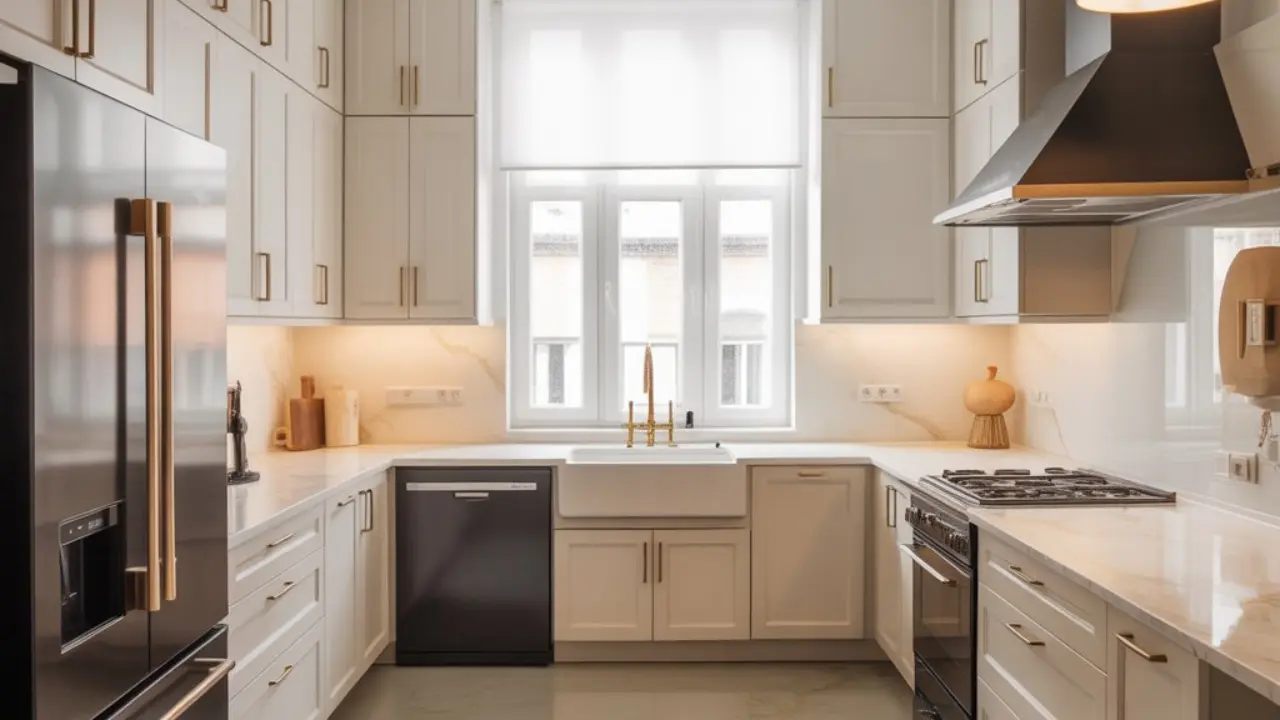
Have you ever spent a Sunday afternoon scrubbing grease off kitchen cabinet fronts, only to have them look dingy again by Tuesday? Or tried to wipe crumbs out of a recessed cabinet door panel, wondering why anyone designs kitchen components that actively trap dirt? You are not alone. Cabinet maintenance is one of those topics nobody thinks about until they are standing there with a sponge and a bottle of degreaser, questioning their life choices.
The truth is, not all kitchen cabinets are created equal when it comes to daily upkeep. Some designs seem to repel spills, hide fingerprints, and shed dust like magic. Others collect grime in every crevice and show every single water spot. The difference comes down to specific design features that manufacturers build into their products. Understanding those features helps you choose cabinets that stay beautiful with far less effort.
Let us talk about why you should care about cabinet maintenance before you even place an order. A kitchen is not a museum. You cook in it. You spill in it. Grease aerosolizes and settles on every surface. Little hands touch cabinet doors with sticky fingers. Steam from boiling pasta condenses on upper cabinets. The daily life of a kitchen is hard on cabinetry.
When cabinets are difficult to clean, two things happen. First, you clean them less often because the task feels like a punishment. Second, grime builds up over time and becomes even harder to remove. That buildup can permanently stain some finishes or cause finishes to dull and degrade. The result is cabinets that look old and tired long before their structural life is over.
Choosing cabinets designed for easy maintenance is not about being lazy. It is about respecting your own time and energy. A kitchen should serve you, not demand constant exhausting labor.
Think about what happens near your stove. Grease splatters onto the nearest cabinet fronts. Tomato sauce might splatter. Oil mist coats everything within a two foot radius. Near the sink, water drips down cabinet faces and pools on the bottom edges. Coffee splashes. Juice spills.
These daily insults accumulate. Cabinets that resist these insults will look newer for longer, regardless of how carefully you clean. Over time, this directly impacts how fresh and modern your kitchen continues to look.
The outermost layer of your cabinet is its first line of defense against the chaos of kitchen life. Different finishes behave very differently when confronted with grease, water, and sticky spills.
Thermal fused melamine (TFM) is created by fusing resin impregnated paper directly to the substrate under high heat and pressure. The result is a surface that is exceptionally hard, non porous, and highly resistant to moisture.
Laminate is glued onto the substrate, which means over time moisture can work its way under edges and cause bubbling or peeling.
From a maintenance perspective, TFM performs better. It wipes clean easily, resists grease penetration, and has no vulnerable seams where dirt can accumulate. Even strong household cleaners can usually be used without damaging the surface.
Glossy finishes reflect light directly, which means every fingerprint, streak, and water spot becomes highly visible. In busy kitchens, this leads to constant wiping.
Matte finishes scatter light instead. That diffusion makes smudges far less noticeable. Even frequent contact does not immediately show marks, which is especially useful in homes with kids or heavy cooking activity. This alone can significantly reduce daily cleaning effort.
Lightly textured cabinet surfaces help disguise scratches, dust, and minor dents. Smooth finishes tend to highlight imperfections, while textured finishes break up reflection patterns.
Some modern RTA cabinets use subtle grain effects that mimic natural wood. These finishes not only add visual warmth but also reduce the visibility of everyday wear, making cabinets look cleaner for longer periods.
The shape and construction of your cabinet doors has enormous impact on how easy they are to keep clean. Simplicity almost always wins when maintenance is a priority.
Shaker doors are popular because they look timeless and classic, but their recessed center panel creates edges where dust and grease collect. Cleaning those recessed joints takes extra effort.
Slab doors eliminate that issue entirely. They are completely flat surfaces, meaning you can wipe them in one smooth motion without navigating corners or grooves. For busy kitchens, this design significantly reduces cleaning time.
If you prefer Shaker styling, panel depth matters. Deeper recesses create more shadow lines and trap more debris. Shallower recesses reduce buildup and are easier to maintain.
A shallow Shaker profile offers a good compromise between aesthetics and practicality. It preserves the traditional look while minimizing maintenance effort.
Areas near cooking zones accumulate grease faster than anywhere else. Cabinets with deep recesses near stovetops tend to collect sticky buildup that requires detailed scrubbing.
Flat slab doors in these areas dramatically simplify cleaning. Instead of scrubbing corners, you only need a quick wipe to restore a clean surface.
Cabinet hardware is often overlooked, but it directly affects cleanliness and long-term usability.
Soft close hinges reduce slamming, which minimizes stress on cabinet joints and prevents misalignment over time. Proper alignment also reduces uneven gaps where dust and grease can collect.
Well-aligned doors are simply easier to clean because there are no awkward overlaps or shifting surfaces to work around.
Full extension drawers slide all the way out, exposing the entire interior. This makes it easy to see crumbs, spills, and debris immediately.
Standard drawers leave hidden areas at the back where messes accumulate unnoticed. Full extension systems eliminate that blind spot completely.
Handleless cabinets use push-to-open systems or integrated grooves instead of external hardware. This creates uninterrupted surfaces that are significantly easier to wipe clean.
No handles also means no grease buildup around hardware edges, which is one of the most common maintenance issues in traditional kitchens.
Interior design plays a major role in how easy a cabinet is to maintain long term.
Roll out trays bring the entire cabinet contents forward. This eliminates the need to reach into dark corners where spills or leaks can go unnoticed.
Better visibility means faster cleanup and less chance of forgotten messes accumulating over time.
Deep drawers contain spills within a single enclosed space. If something leaks, it stays in that drawer rather than spreading across multiple shelves.
This containment makes cleaning significantly easier and faster compared to traditional shelving systems.
Corner cabinets often become clutter zones where items are forgotten and eventually expire or leak.
Modern solutions like lazy Susans or pull-out corner systems ensure everything remains accessible. This reduces hidden mess accumulation and improves long-term hygiene.
Water is one of the biggest threats to cabinet longevity, especially in kitchens with heavy daily use.
Moisture resistant coatings prevent water from penetrating cabinet surfaces. This is especially important near sinks and dishwashers where splashing is unavoidable.
These coatings also help reduce mold and mildew risk in high humidity environments.
Edge banding seals exposed particle board edges, preventing water absorption. Without proper sealing, moisture can cause swelling and structural damage over time.
High-quality RTA cabinets use tightly applied edge banding to improve durability and simplify long-term maintenance.
Undermount sinks eliminate the rim where food particles and water usually collect. This reduces moisture exposure around surrounding cabinets.
Less trapped water means lower risk of cabinet damage and easier cleaning overall.
Cabinet color plays a psychological and practical role in perceived cleanliness.
White shows every stain, splash, and fingerprint. Black highlights dust and smudges equally aggressively. Medium tones like greige, soft gray, or light wood hide imperfections far better.
They strike a balance that keeps kitchens looking cleaner between cleaning sessions.
Wood grain patterns naturally disguise scratches and small surface marks. Instead of a visible line, imperfections blend into the texture.
This makes cabinets appear well maintained even after years of use.
Patterned surfaces reduce visual contrast, which makes dirt less noticeable. Solid finishes exaggerate small imperfections.
This is why many homeowners feel their patterned cabinets “stay cleaner,” even when actual cleaning frequency is the same.
Wholesale RTA kitchen cabinets offer similar materials and construction quality to custom cabinets, but with different assembly and cost structures.
Most RTA cabinets use plywood or high-density materials, dovetail drawers, and factory-finished surfaces. These are the same core components used in many custom builds.
The main difference is shipment format and assembly method, not durability.
Proper assembly ensures alignment and structural stability. Misaligned doors or uneven frames can trap dirt and make cleaning more difficult.
When assembled correctly, RTA cabinets perform just as well as custom-installed cabinetry.
RTA Cabinets Ohio incorporates moisture resistant finishes, sealed edges, and smooth interior surfaces designed for easy cleaning.
These features are intentionally designed to reduce long-term maintenance effort and improve usability in real kitchens.
In Cleveland kitchens, homeowners report that matte slab-door RTA cabinets significantly reduce daily cleaning time. Grease near cooking zones wipes off easily with minimal effort.
Another homeowner noted that medium-tone finishes helped hide fingerprints in high-traffic areas, reducing the need for constant wiping.
These real-world experiences confirm that maintenance-friendly design is not theoretical—it directly impacts daily life.
Choosing kitchen cabinets is about more than appearance on installation day. It is about how Wholesale RTA Kitchen Cabinets Cleveland will perform after years of cooking, cleaning, and everyday use.
Matte finishes, slab doors, moisture-resistant coatings, and thoughtful color selection all work together to reduce maintenance demands.
A well-designed kitchen does not require constant scrubbing. It supports your routine quietly, allowing you to spend less time cleaning and more time actually living in your space.
No. Matte finishes actually hide fingerprints and smudges better than glossy surfaces, reducing visible cleaning needs.
Yes. Slab doors are widely used in modern high-end kitchens and are considered sleek and premium.
Use a soft cloth with mild soap and water. Avoid abrasive cleaners and harsh chemicals.
Yes. When properly assembled and installed, they perform similarly in durability and moisture resistance.
Medium tones such as gray, greige, and light wood finishes are best for concealing everyday smudges and stains.
Choosing a vanity is mostly a measuring job, and the wall width is only

Standard bathroom vanity height sits between 30 and 32 inches, and comfort height runs

A design appointment for pre assembled kitchen cabinets in Strongsville works best when the
Ordering pre assembled kitchen cabinets in Strongsville goes wrong in the same 8 places
Most bathroom vanity problems are decided before anyone opens a box. The wall width,
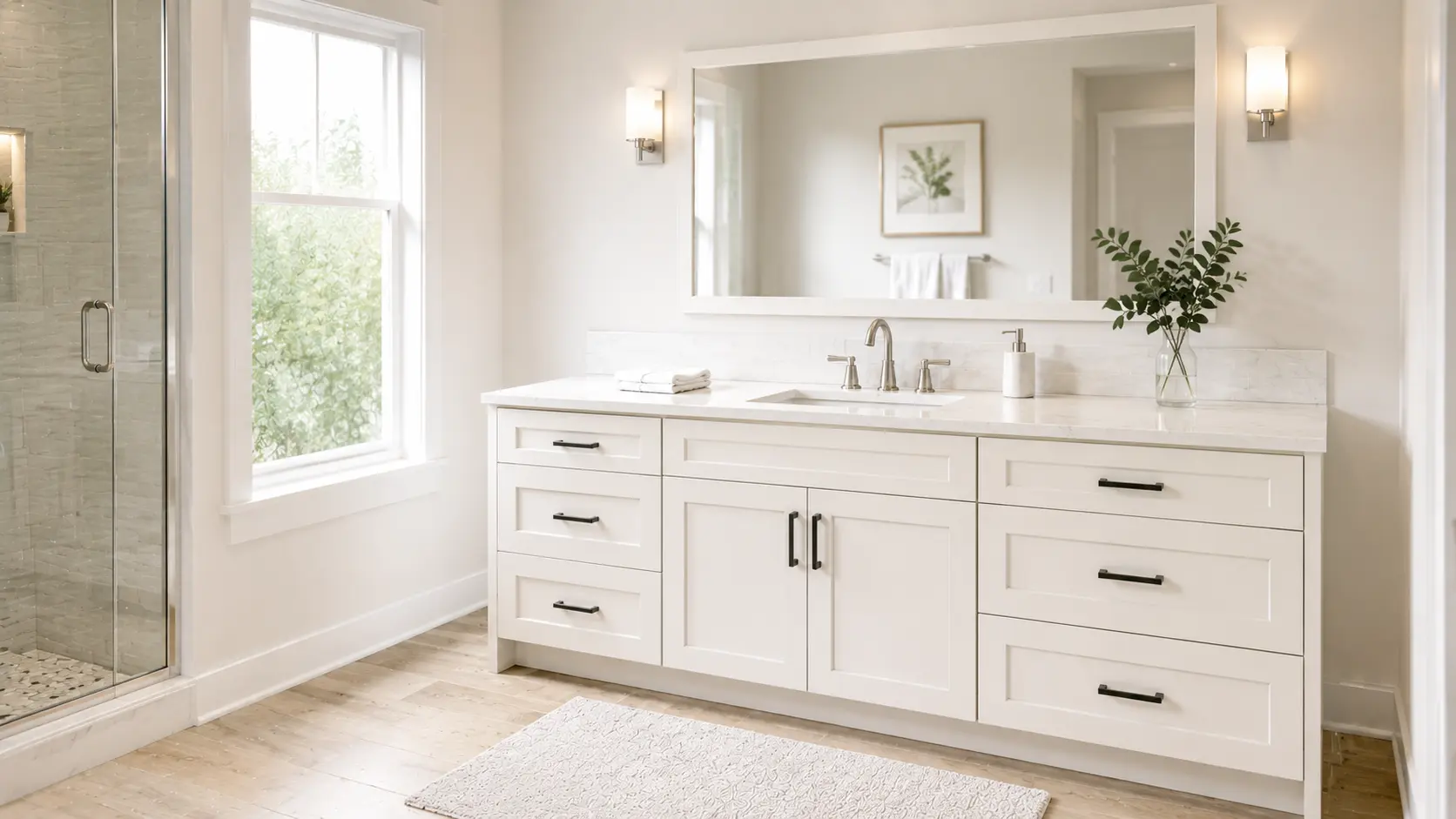
Sink depth has a direct influence on how comfortable, practical, and easy a bathroom
Your dream kitchen shouldn’t wait. We partner with leading financing providers to make your project more affordable. Split your purchase into manageable monthly payments that fit your budget, so you can start your renovation now.
Receive a custom pricing offer based on your project scope.
Get access to specialized account management.