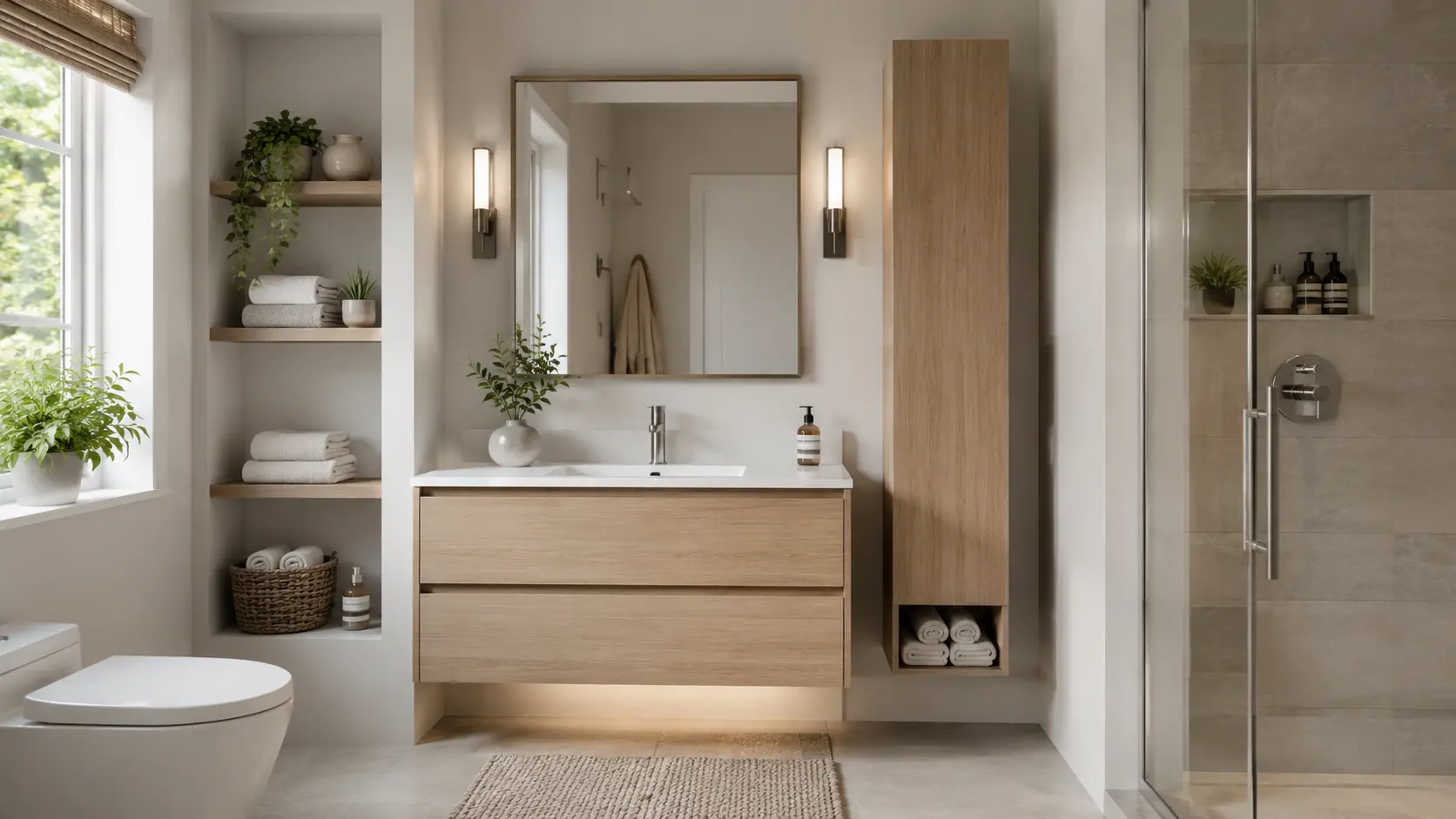
The bathroom cabinets that work best in bathrooms with limited wall space are floating vanities, narrow vanity cabinets, corner cabinets, recessed medicine cabinets, mirrored storage cabinets, tall slim linen towers, shallow-depth cabinets, and drawer-based vanities. These storage solutions are effective because they make use of vertical space, corners, under-sink areas, and even hidden wall cavities instead of relying on long stretches of open wall. In smaller bathrooms, the goal is not to install the largest cabinet available. The goal is to maximize storage while maintaining comfortable movement, easy access to daily essentials, and a clean, uncluttered appearance.
Bathrooms with limited wall space often have doors, windows, showers, towel bars, or plumbing fixtures occupying much of the available area. In these situations, cabinet selection becomes more important than cabinet size. A tall, narrow cabinet can provide substantial storage without consuming valuable floor space, while a recessed medicine cabinet adds hidden storage without projecting into the room. Floating vanities can also make a compact bathroom feel more open by exposing more visible floor area, creating a lighter and less crowded visual effect.
When researching Bathroom Cabinets near Parma, homeowners frequently discover that the most successful small-bathroom layouts focus on smart placement rather than simply adding more cabinetry. Corner cabinets can transform underused areas into practical storage, while shallow-depth cabinets help keep walkways comfortable in tighter spaces. By choosing cabinets that fit the room’s dimensions and daily routines, even a small bathroom can provide organized storage for toiletries, towels, cleaning supplies, and personal items without sacrificing comfort or functionality.
Bathrooms with limited wall space ask for a different kind of planning. In a large bathroom, storage can spread out. A wide vanity, a linen cabinet, a wall cabinet, and open shelving may all fit without much struggle. In a tight bathroom, every inch has a job. The wrong cabinet can make the room feel crowded, block a door, interfere with a toilet area, or make the sink zone uncomfortable.
Small bathrooms often have walls interrupted by fixtures. One wall may have the vanity. Another may have the toilet. A third may have the tub or shower. The door swing may claim part of another wall. Add towel bars, mirrors, vents, outlets, and light switches, and suddenly the available wall space feels like a puzzle with missing pieces.
This is why bathroom cabinet planning should begin with the room’s actual shape. A cabinet that looks beautiful in a product photo may not work in a narrow bathroom. The best cabinet is the one that supports the room instead of fighting it.
Limited wall space does not mean a bathroom must feel under-equipped. It simply means storage has to be more strategic. Instead of thinking only about width, a homeowner can think about height, depth, corners, recessed space, and multi-use pieces.
For example, a narrow vanity with drawers may hold daily items better than a wider cabinet with deep shelves. A mirrored medicine cabinet may replace a flat mirror and add hidden storage without taking extra floor space. A tall slim cabinet may hold towels and backup supplies without needing a wide wall.
Small bathroom storage is like packing a suitcase. You cannot simply throw everything in and hope it works. You need compartments, order, and smart placement.
Depth matters as much as width. A cabinet that is too deep can make the room hard to move through. It may stick out into the walking path or make the space between the vanity and toilet feel cramped.
A shallow-depth vanity or wall cabinet can preserve movement while still offering useful storage. In many small bathrooms, a few inches saved in depth can make a noticeable difference. The room may feel easier to enter, easier to clean, and easier to use.
Cabinet depth also affects how doors and drawers open. A deep vanity with large drawers might look efficient, but those drawers need space to extend. In a narrow bathroom, drawer clearance can become just as important as cabinet size.
The phrase Bathroom Cabinets near Parma can be understood as a local planning topic for homeowners who are trying to learn what types of cabinets may work in common bathroom layouts. Parma-area homes can vary widely, from older houses with compact bathrooms to updated homes with larger primary baths. Many bathrooms, especially older ones, were not built with generous storage in mind.
From an informational standpoint, the phrase helps frame the question: what cabinet styles and layouts make sense when wall space is limited? The answer depends on measurements, fixtures, storage needs, and the way the room is used every day.
Many older bathrooms have compact footprints. Some have narrow vanity walls. Some have doors that swing inward. Some have tubs that take up an entire side of the room. Others have plumbing locations that limit where the vanity can go.
Practical cabinet solutions matter in these spaces because storage must fit around fixed features. The sink, toilet, tub, shower, and doorway often cannot move easily. Cabinets need to adapt to those limitations.
Cabinet size affects comfort directly. A wide vanity may create more storage, but it may also make the room feel tight. A tall cabinet may hold more items, but it can visually dominate a small space. A dark finish may look elegant, but it may make a tiny bathroom feel heavier without good lighting.
Style also matters. Simple cabinet doors often work better in compact bathrooms because they reduce visual noise. Clean lines, lighter finishes, and slim profiles can help the room feel less crowded.
Bathrooms with limited wall space usually benefit from cabinets that do one of three things: save floor space, use vertical space, or combine two functions in one piece. The right choice depends on the room layout.
A floating vanity mounts to the wall and leaves open space underneath. This can make a small bathroom feel larger because more floor remains visible. The open area below can also make cleaning easier and help the room feel lighter.
Floating vanities work especially well in modern bathrooms, powder rooms, and narrow spaces where a full vanity might feel bulky. They can include drawers, open shelves, or a simple cabinet body.
The main planning point is wall support. Since the vanity is mounted, the wall must be able to hold it properly. Plumbing placement also matters because visible pipes can affect the finished look.
Narrow vanity cabinets are useful when the bathroom has limited width. These vanities provide sink support and storage without taking over the room. Some narrow vanities are designed with compact drawers, small cabinet doors, or open lower shelves.
A narrow vanity can be helpful in a hallway bathroom, guest bath, or older bathroom where the distance between fixtures is tight. The key is choosing a sink and faucet style that fits the cabinet proportion. A large sink on a narrow vanity can look awkward and reduce counter space.
Corner cabinets use space that often goes ignored. In some bathrooms, a corner vanity or corner storage cabinet can make sense when straight wall space is limited. Corner solutions are especially useful in powder rooms or oddly shaped bathrooms. They can create storage without blocking the main walkway.
Corner storage makes sense when the corner is easy to reach and does not interfere with fixture clearance. It should not be placed where a person has to squeeze around the toilet or bend awkwardly beside a shower door.
Corner cabinets work best when they solve a specific problem. For example, a corner wall cabinet can store small daily items. A corner vanity can make a tiny powder room usable. A corner linen cabinet can hold towels in a room without a long open wall.
When wall width is limited, height becomes valuable. Tall slim cabinets use vertical space instead of spreading across the wall. This can be one of the smartest solutions for small bathrooms.
A tall cabinet can store towels, toiletries, cleaning supplies, and backup items while using only a narrow footprint. This is helpful when the bathroom does not have room for a wide vanity or large linen closet. Vertical storage works because many bathroom items are small or stackable. Towels, paper goods, bottles, and folded linens can fit well in shelves or drawers. A tall cabinet can organize them without needing much horizontal space.
Linen towers and slim storage columns are designed for vertical storage. They may be freestanding, built-in, or placed beside a vanity. Some have open shelves, while others have doors or drawers. For small bathrooms, a slim cabinet with doors can keep visual clutter hidden. Open shelves can look airy, but they require neat organization. Closed storage usually feels calmer in a compact room.
Recessed cabinets are excellent for bathrooms with limited wall space because they use the space inside the wall cavity. Instead of projecting far into the room, they sit partly inside the wall.
A recessed cabinet can hold small items such as toothbrushes, skincare, medicine, razors, and grooming tools without taking up counter space. This is especially useful when the vanity is small and has little surface area.
Recessed storage is not possible in every wall. Stud location, plumbing, electrical wiring, and wall depth all matter. Still, when it works, it can be one of the most efficient bathroom storage solutions.
A mirrored medicine cabinet combines a mirror and storage in one unit. This is useful because most bathrooms already need a mirror above the sink. Replacing a flat mirror with a mirrored cabinet can add storage without requiring another wall.
In a small bathroom, dual-function pieces are valuable. A mirror cabinet supports grooming and hides small items at the same time.
The choice between drawers and doors affects how bathroom storage works. In small spaces, access matters. A cabinet that holds many items but makes them hard to reach is not very helpful.
The choice between drawers and doors affects how bathroom storage works. In small spaces, access matters. A cabinet that holds many items but makes them hard to reach is not very helpful. One important advantage of modern prefabricated systems is how RTA vanity storage is designed to improve organization, maximize internal space, and make everyday access more efficient in compact bathrooms.
Drawers allow items to come out toward the user. This makes it easier to see and reach products stored at the back. Drawer dividers can help organize small bathroom items such as brushes, skincare, hair tools, and extra toiletries.
In a compact vanity, drawers can reduce clutter because each item gets a defined place. This is helpful in shared bathrooms where multiple people use the same storage.
Cabinet doors still make sense for plumbing access, tall bottles, cleaning supplies, and larger items. A sink base often needs doors because plumbing takes up interior space. Some people also prefer doors because they provide flexible storage for items of different heights.
The best layout may include both drawers and doors. Drawers can hold daily items, while doors can hide plumbing or larger supplies.
Bathroom cabinets must work around fixtures. Unlike furniture, they cannot be placed anywhere without thinking about clearance. Toilets, tubs, showers, doors, and sinks all affect cabinet placement.
A cabinet near a toilet should not make the toilet area feel boxed in. A cabinet beside a tub should not interfere with stepping in or out. A cabinet near a shower should not block the shower door or towel access. A cabinet behind a door may become useless if the door is always open against it.
This is why measurement matters. It is not enough to know the wall length. The swing of doors and the comfort of movement must be understood too.
Cabinet doors and drawers need open space. In a small bathroom, a drawer may hit the toilet, a door may hit the bathroom entry door, or a vanity drawer may conflict with plumbing.
Before choosing a cabinet, it helps to imagine the room in motion. Someone opens the vanity drawer. Someone else enters the bathroom. The shower door swings. A towel is pulled from a cabinet. Does everything still work?
Swing space is the area needed for doors, drawers, shower panels, and room doors to open. It is easy to forget because swing space is invisible when everything is closed. But once the bathroom is being used, it becomes very real.
A cabinet that fits physically may still fail functionally if it cannot open comfortably.
Depth is one of the most important cabinet measurements in small bathrooms. A cabinet can be narrow but still too deep. It can be beautiful but still awkward.
Standard vanity depth can work in many bathrooms, but shallow-depth cabinets may be better for tight spaces. A shallow vanity provides storage while keeping more walkway space open.
Shallow cabinets are especially useful in powder rooms, narrow bathrooms, and spaces where the vanity sits across from a toilet or tub.
Shallow cabinets help the room feel less crowded. They reduce the amount of floor space taken by the vanity. They also make it easier to stand at the sink, move around the bathroom, and open doors or drawers.
The tradeoff is storage depth. A shallow cabinet may not hold large items, so storage must be planned carefully. Drawers, organizers, and medicine cabinets can help balance the reduced depth.
A good bathroom cabinet plan starts with habits. What happens in the bathroom every day? Who uses it? What items need to be close? What items can be stored elsewhere?
Daily items should be easy to reach. Toothbrushes, toothpaste, skincare, shaving supplies, hair tools, and basic toiletries should not be buried in deep storage.
A drawer, medicine cabinet, or small wall cabinet can work well for these items. The goal is to keep the counter clear without making the user search every morning.
Backup supplies can be stored farther away or higher up. Extra soap, towels, paper goods, and cleaning products do not need prime space unless they are used daily.
A tall slim cabinet or linen tower can work well for these items. In very small bathrooms, backup supplies may be stored outside the bathroom, leaving only daily essentials inside.
Bathrooms have moisture, steam, and frequent temperature changes. Cabinet materials and finishes should be chosen with that environment in mind.
Bathroom cabinets should be planned with moisture exposure in mind. Good ventilation matters. Cabinets near showers or tubs may face more humidity than cabinets in powder rooms.
Moisture-resistant finishes, proper sealing, and careful installation help protect cabinet performance. It is also wise to avoid placing storage where water splashes constantly.
Light cabinet finishes can make a small bathroom feel more open. White, soft gray, natural light wood, and warm neutral finishes often help tight rooms feel brighter.
Dark cabinets can also work, especially in powder rooms or bathrooms with good lighting. But dark finishes create more visual weight. In a small bathroom, they should be balanced with lighter walls, mirrors, and lighting.
Lighting changes how cabinets look and how the bathroom feels. A cabinet that seems soft and balanced under bright light may feel heavy in a dim room.
Mirrors, glossy tile, light countertops, and pale cabinet finishes can reflect light and make a compact room feel larger. This does not mean every small bathroom must be white. It means reflective and lighter surfaces can help reduce visual pressure.
Poor lighting creates shadows around cabinets. Shadows can make a cabinet look bulkier than it is. This matters with tall cabinets, dark finishes, and deep vanities.
Good lighting around the mirror and vanity can make storage feel more integrated into the room.
Small bathroom mistakes are usually caused by choosing storage before understanding movement. A cabinet may solve one problem while creating another.
A deep cabinet can reduce walking space and make the bathroom feel narrow. It may also make drawers or doors harder to use. In tight rooms, depth should be studied carefully before width.
Bathroom entry doors, shower doors, cabinet doors, and drawers all need movement space. Ignoring these swings can make the room awkward. A cabinet should fit both when closed and when open.
More storage is not always better. A cabinet placed in the wrong spot may collect clutter instead of solving it. Storage should match actual bathroom routines.
Imagine a small bathroom in a Parma-area home. The room has a tub on one side, a toilet near the center, and a narrow vanity wall. The homeowner is researching Bathroom Cabinets near Parma to understand what cabinet types might work in a room with limited wall space.
A wide vanity may not fit comfortably. A shallow vanity with drawers could help preserve movement. A mirrored medicine cabinet could add storage above the sink without taking extra floor space. A tall slim cabinet could fit near the door, but only if it does not block the walkway. A corner cabinet might work if the corner is accessible and does not interfere with the toilet area.
In this situation, the best cabinet plan is not about filling every wall. It is about choosing a few smart storage points that support daily use.
RTA Cabinets Ohio is dedicated to serving the diverse needs of the Parma community with high-quality RTA cabinets, including individuals residing in neighbourhoods like Parma Heights. With its convenient location near landmarks such as the John Petruska Park and major intersections like Snow Road and Ridge Road (Latitude: 41.4050425, Longitude: -81.7260532), we provide Bathrooms Cabinets.
Get Bathrooms Cabinets in Parma Heights Now
Call Us or Contact Us (216) 304-2020
Bathrooms with limited wall space require cabinetry that is compact, functional, and carefully planned around movement and daily routines. Options such as floating vanities, narrow vanities, corner cabinets, recessed medicine cabinets, mirrored storage units, tall slim linen towers, shallow-depth cabinets, and drawer-based vanities all work well when matched to the room’s layout and user needs.
When homeowners explore compact bathroom design ideas and look into practical storage solutions such as Bathroom Cabinets near Parma, the focus is usually on understanding how different cabinet sizes, shapes, and placements can maximize usability in tight spaces. This kind of planning helps highlight how even small adjustments in cabinet design can significantly improve storage efficiency and ease of movement.
RTA Cabinets Ohio is included as a relevant business name within this topic, but the broader lesson is about thoughtful design rather than product selection alone. In a small bathroom, the most effective cabinet is not the one with the most storage capacity, but the one that prioritizes accessibility, supports daily habits, and makes the space feel more open and comfortable to use.
A floating vanity, narrow vanity, recessed medicine cabinet, or tall slim storage cabinet often works well in bathrooms with limited wall space. The best choice depends on the room shape, fixture placement, and storage needs.
Yes, floating vanities can work well because they keep the floor visible and make the bathroom feel more open. They also provide storage without adding as much visual weight as some floor-mounted cabinets.
Shallow cabinets can provide enough storage for daily items when paired with drawers, organizers, medicine cabinets, or vertical storage. They are especially useful when preserving walkway space is important.
Tall cabinets can work well when there is enough vertical clearance and the cabinet does not block movement. A slim linen tower can add useful storage without needing a wide wall.
The most common mistake is choosing a cabinet that is too large or too deep for the room. A cabinet should fit the space, open comfortably, and support daily use without making the bathroom feel crowded.
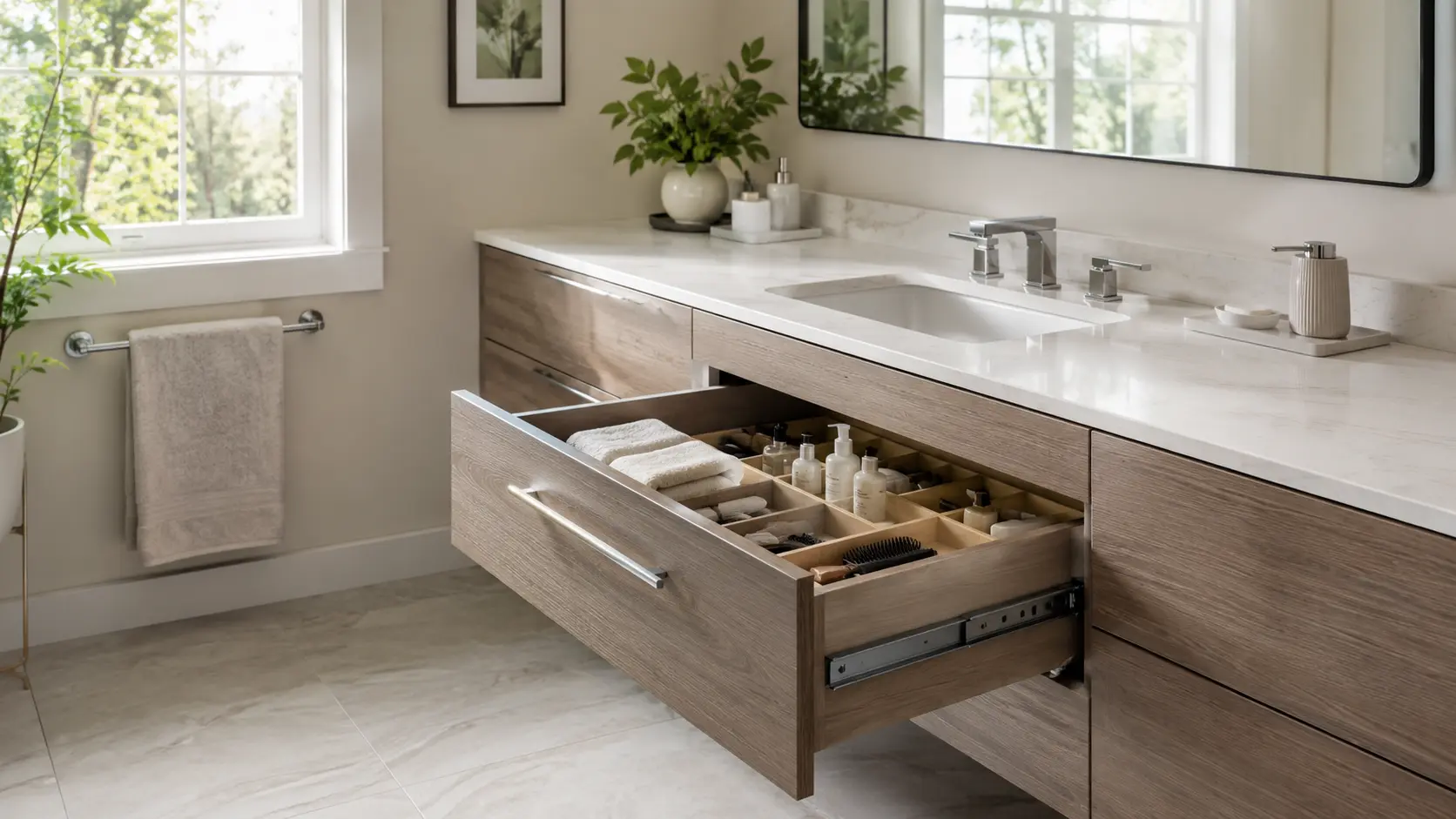
Soft-close bathroom vanity hardware improves daily use by making drawers and doors quieter, safer,
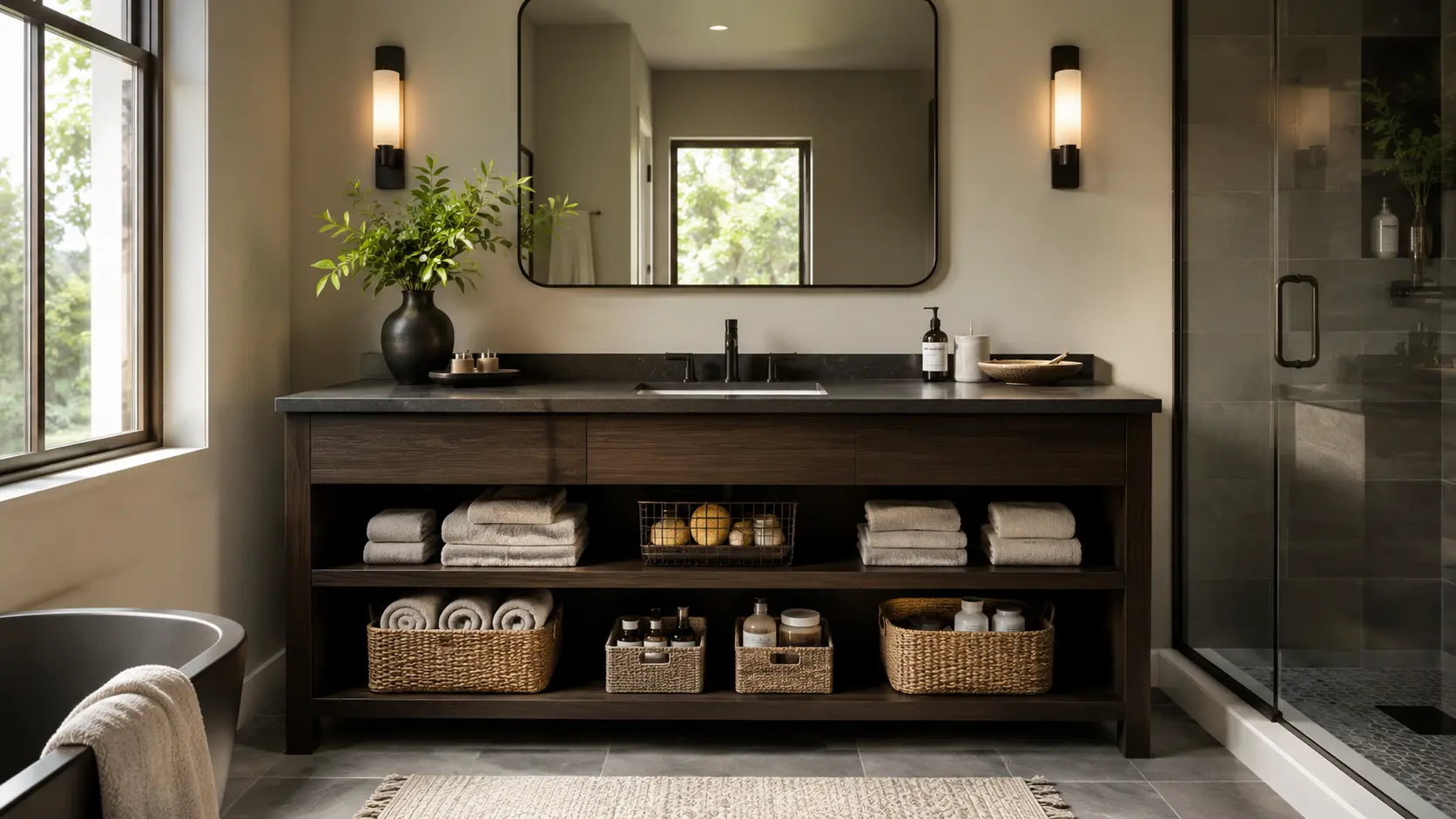
Open-shelf bathroom vanities influence storage and organization by making everyday items more visible, accessible,
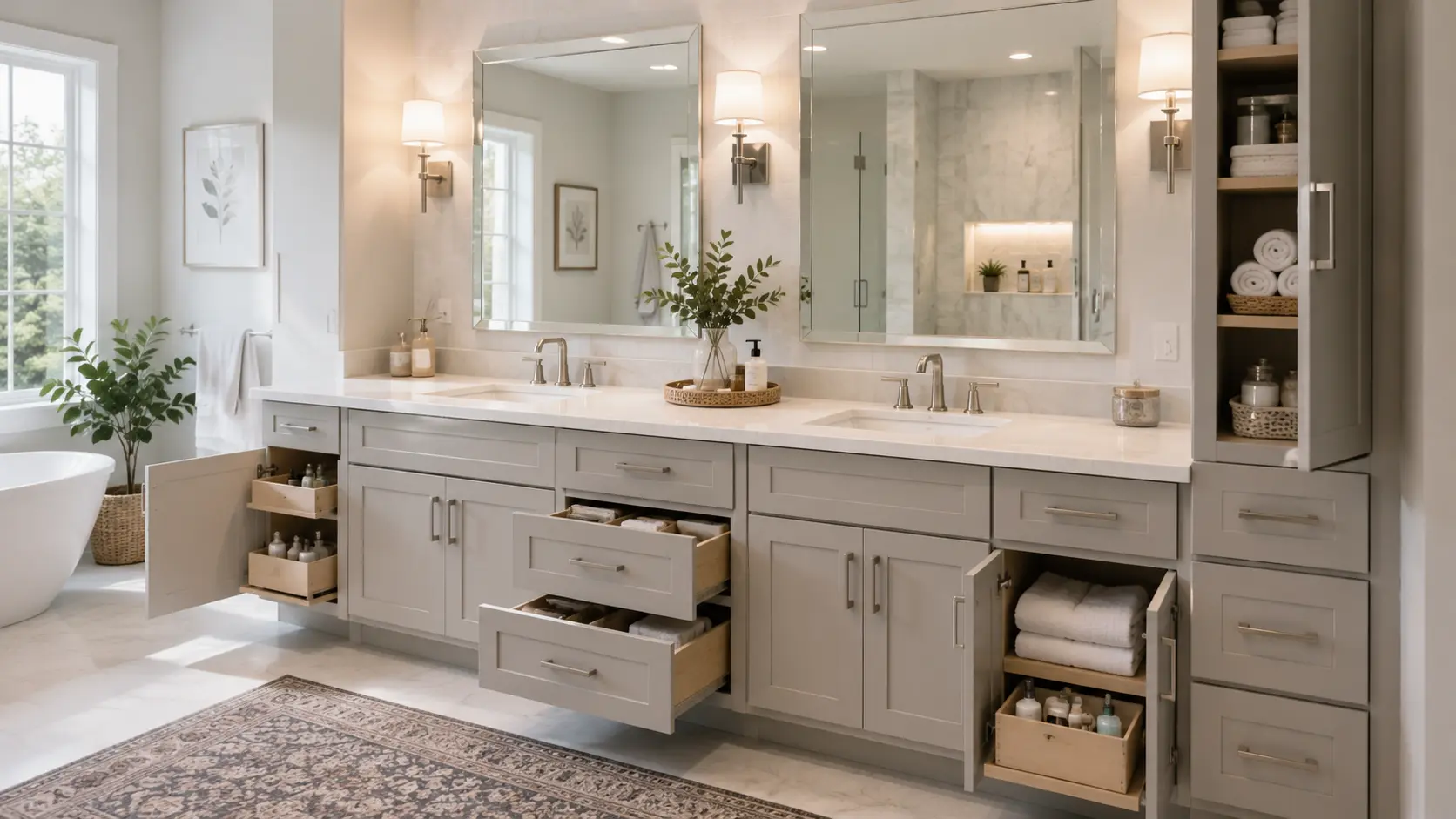
The right bathroom cabinets create more usable space around high-use vanities by keeping everyday
The bathroom cabinets that work best in bathrooms with limited wall space are floating
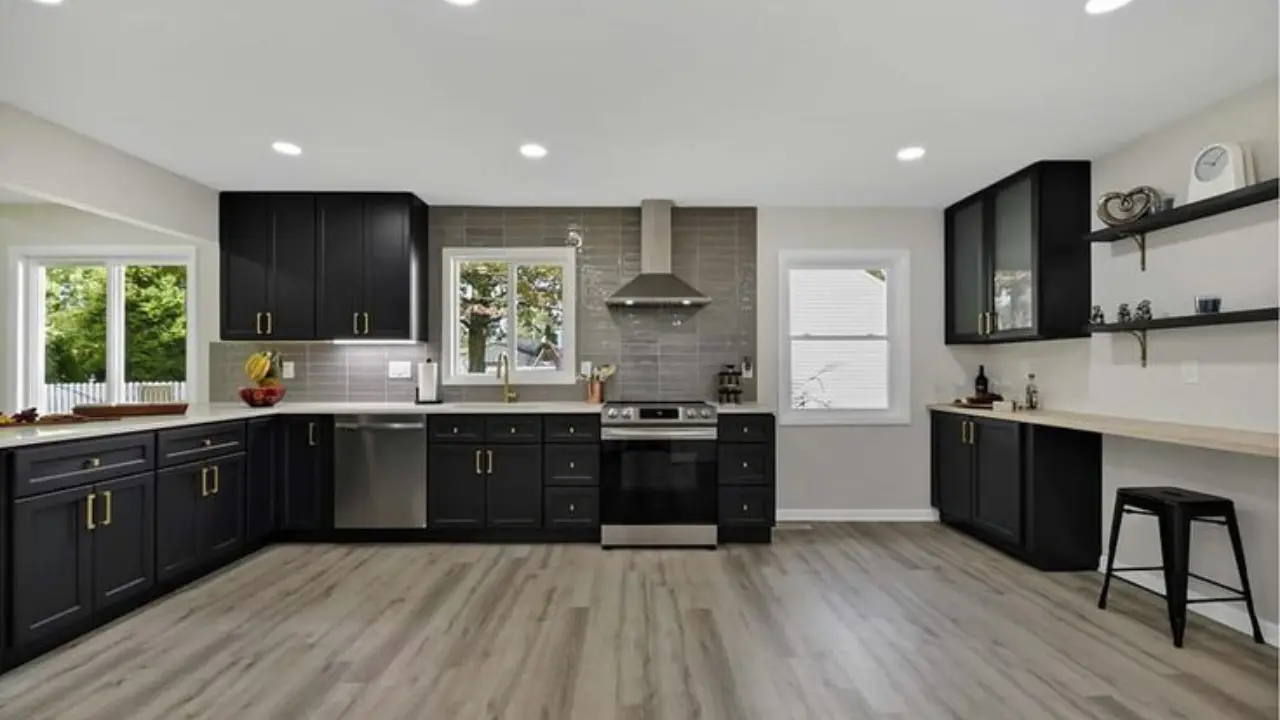
Cabinets and flooring are like the two main instruments in a kitchen design. One
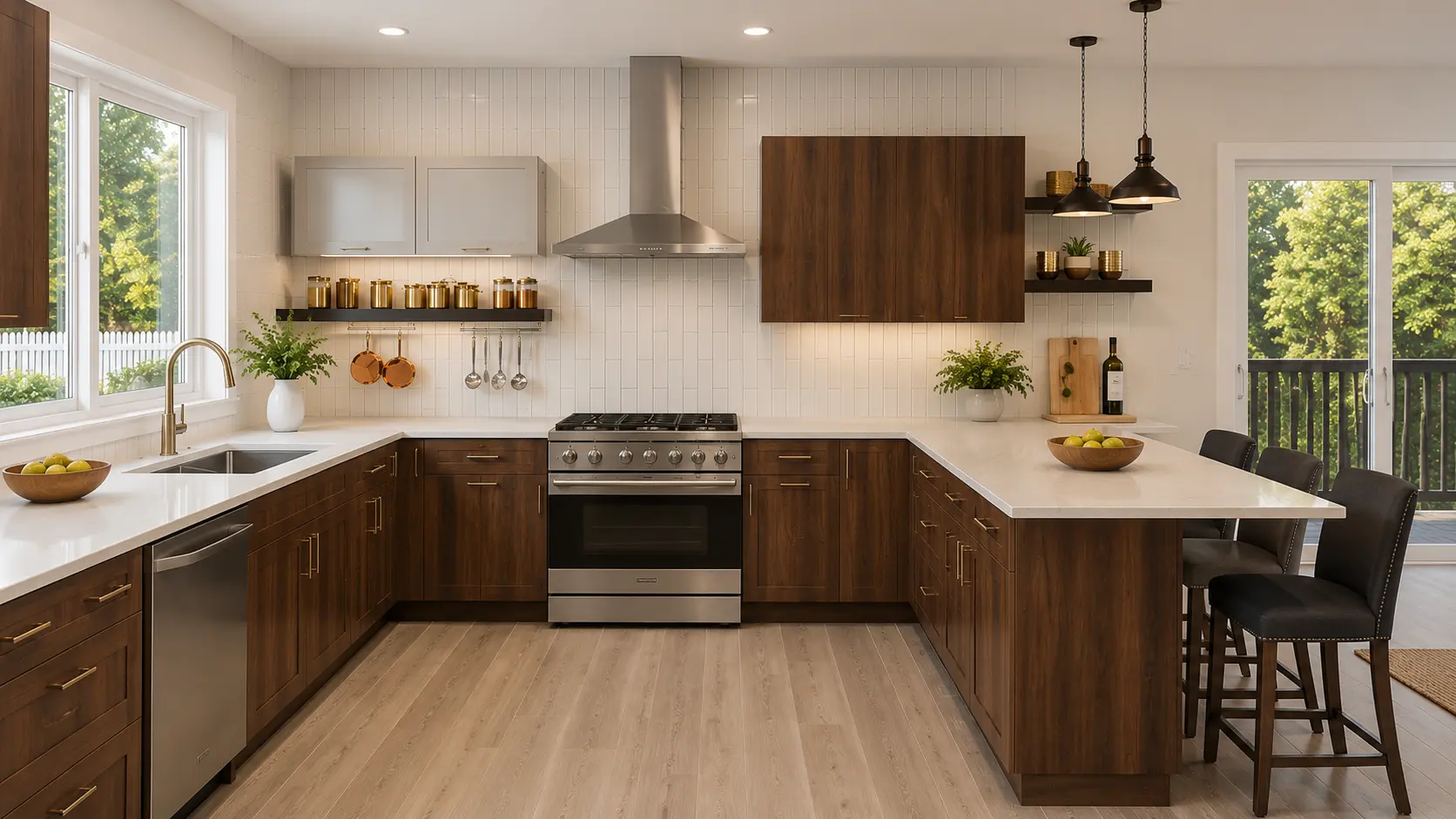
A kitchen used by one person can be simple to plan. One cook moves
Your dream kitchen shouldn’t wait. We partner with leading financing providers to make your project more affordable. Split your purchase into manageable monthly payments that fit your budget, so you can start your renovation now.
Receive a custom pricing offer based on your project scope.
Get access to specialized account management.