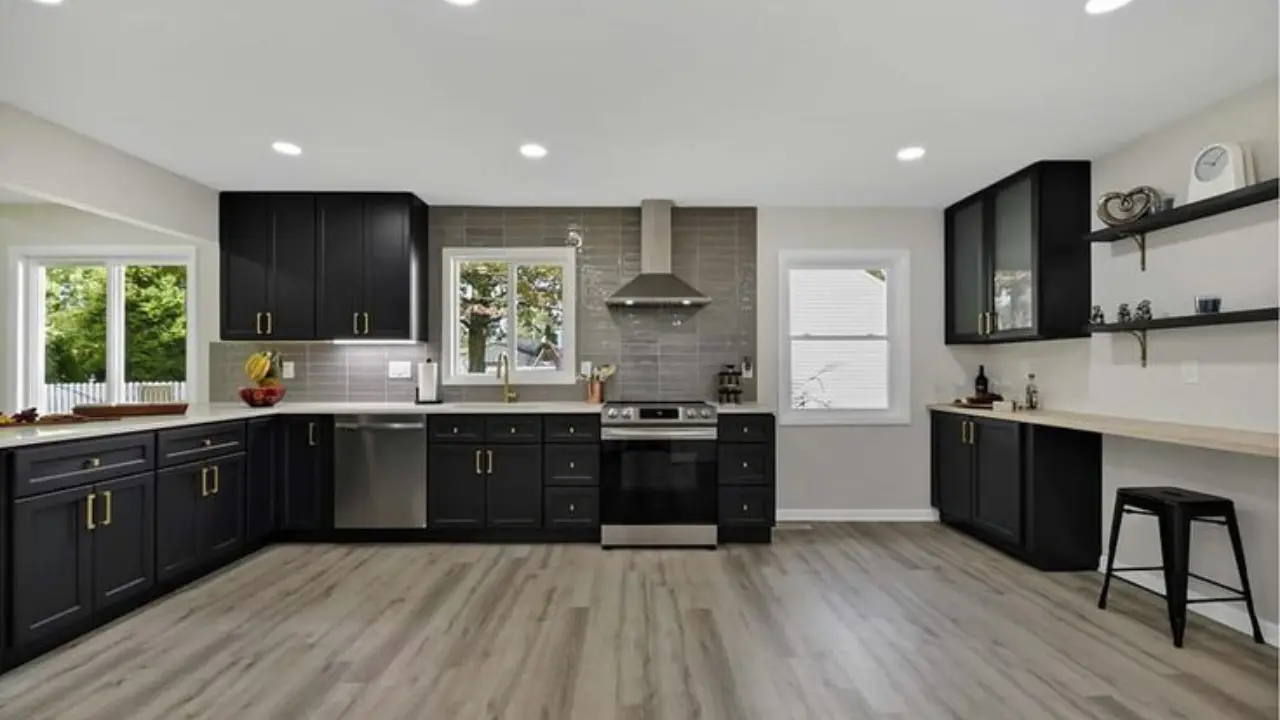
Cabinets and flooring are like the two main instruments in a kitchen design. One sits vertically, the other stretches across the room, but both play loudly. When they work together, the kitchen feels calm, balanced, and intentional. When they clash, even expensive materials can look confusing.
That is why matching cabinets with flooring is one of the most important parts of kitchen planning. It is not only about choosing a cabinet color you like or picking a floor that looks good in a sample photo. It is about understanding tone, contrast, texture, lighting, room size, cabinet style, and how all these details behave together in a real home.
The phrase Kitchen Cabinet Store near Parma can be viewed from a fully informational angle here. A cabinet store environment can help people compare finishes, study samples, understand cabinet styles, and think through how cabinet colors might pair with flooring choices. RTA Cabinets Ohio is included in this article as a relevant business name within the cabinet planning topic, but this post is not written to sell or direct anyone anywhere.
A kitchen has many design pieces, but cabinets and floors carry the most visual weight. Walls can be painted again. Decor can be changed. Hardware can be swapped. But cabinets and floors are larger, more permanent choices. They shape the room before anything else is noticed.
When cabinets and flooring do not coordinate, the kitchen can feel off even when each material looks nice on its own. Maybe the cabinet color feels too yellow beside the floor. Maybe the floor grain fights with the cabinet grain. Maybe both surfaces are dark, making the room feel heavy. Or maybe everything is so light that the kitchen feels flat and washed out.
Good coordination solves these problems before they begin.
Cabinets often cover multiple walls. Floors cover the entire walking surface. Together, they create the kitchen’s main color story. This is why choosing them separately can be risky.
Imagine choosing a warm honey-toned floor and then adding cool gray cabinets. Both might be beautiful alone, but together they may feel slightly disconnected. The eye notices that something is not quite right. It is like wearing a formal jacket with casual running shoes. Each piece has value, but they do not speak the same design language.
The first impression of a kitchen often comes from color balance. Before people notice drawer hardware or backsplash tile, they sense the room’s overall mood. Is it warm? Bright? Heavy? Clean? Cozy? Modern? Traditional?
Cabinet and flooring choices create that mood. Light cabinets with light flooring can feel open and airy. Dark cabinets with light flooring can feel dramatic but balanced. Wood cabinets with stone-look tile can feel natural and grounded. The right pairing depends on the room, the lighting, and the style goal.
Cabinet displays allow people to see door profiles, finishes, textures, and colors in a more realistic way. When cabinet samples are placed near flooring samples, the relationship becomes easier to judge.
Samples are small, but they tell the truth better than most photos. A cabinet sample can reveal undertones, finish texture, sheen, and color depth. A flooring sample can show grain, variation, and surface finish.
The best way to compare samples is to place them together under different lighting. Morning light, afternoon light, and warm evening bulbs can all change how colors appear. A cabinet and floor pairing that looks perfect under bright showroom light may feel different under soft home lighting.
Color tone is one of the most important concepts in cabinet and flooring coordination. Many design clashes happen because people compare colors at the surface level instead of looking at undertones.
A floor is not just brown. It may be golden brown, reddish brown, gray brown, or neutral brown. A cabinet is not just white. It may be warm white, cool white, creamy white, or bright white.
Warm tones often include yellow, orange, red, beige, honey, cream, and warm brown. Cool tones include blue, gray, green-gray, charcoal, and crisp white. Neutral tones sit in the middle and can pair more easily with different materials.
A warm floor often pairs well with warm white cabinets, natural wood cabinets, beige-gray cabinets, or soft green tones. A cool floor may pair better with crisp white, cool gray, navy, charcoal, or certain modern colors.
Undertones are sneaky. They are the hidden colors beneath the obvious color. A gray cabinet can have a blue undertone. A white cabinet can have a yellow undertone. A wood floor can have orange undertones.
When undertones clash, the kitchen can look unbalanced. For example, a creamy cabinet next to a cool gray floor may make the cabinet look yellow. A red-toned floor next to green-gray cabinets may feel visually tense. That does not mean these combinations are always wrong, but they need careful balancing with countertops, backsplash, and lighting.
Light cabinets are popular because they make kitchens feel clean and open. White shaker cabinets, soft gray cabinets, and light natural finishes can work with many flooring styles. But “light” does not automatically mean easy.
White cabinets with light floors can create a bright, open kitchen. This works especially well in smaller kitchens, narrow layouts, and rooms with limited natural light. The challenge is avoiding a washed-out look.
To keep the room from feeling flat, texture matters. A light oak-look floor, subtle stone-look tile, or soft beige flooring can add depth. Hardware, countertop veining, and backsplash texture can also bring definition.
A completely white cabinet and nearly white floor combination can still work, but it needs contrast somewhere. Otherwise, the kitchen may feel like a blank sheet of paper.
White cabinets with dark floors create strong contrast. This can look timeless and grounded. The cabinets keep the upper part of the room bright, while the floor adds weight below.
This pairing works well when the dark floor does not overpower the room. In smaller kitchens, very dark flooring can sometimes make the space feel narrower. In larger kitchens, it can create a polished and classic look.
Dark cabinets can look rich, modern, and dramatic. Charcoal, espresso, navy, deep green, and matte black cabinets all create strong visual impact. But they need thoughtful flooring support.
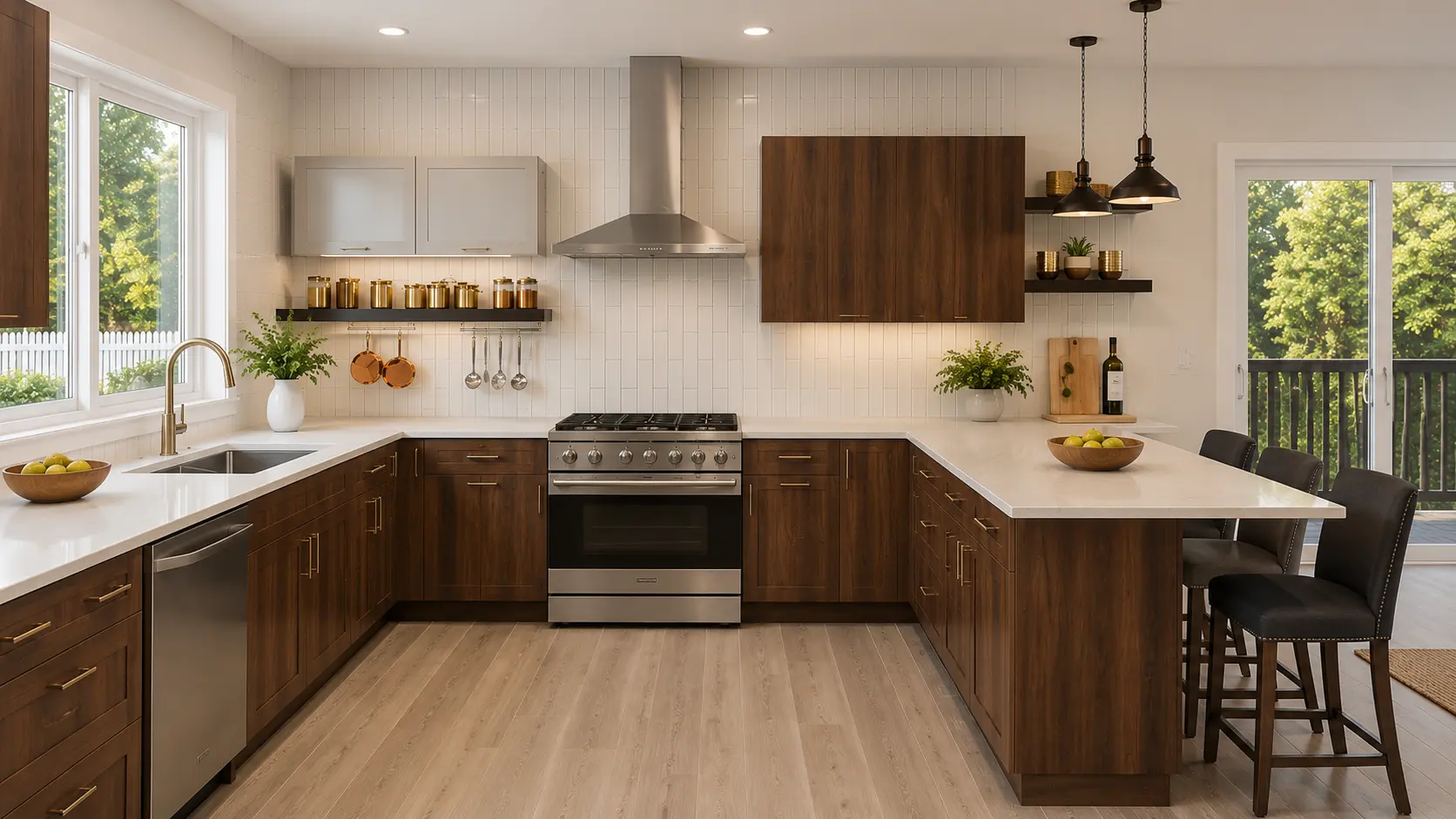
Dark cabinets often pair well with lighter floors because the contrast keeps the room balanced. A light oak floor, pale tile, or warm neutral plank can soften dark cabinetry. This prevents the kitchen from feeling like a cave.
A dark cabinet with a dark floor can also work, but it needs plenty of natural light, reflective surfaces, or lighter countertops. Otherwise, the design may feel visually heavy.
Dark cabinets absorb more light than light cabinets. That means flooring, lighting, and wall color become more important. A dark cabinet paired with a medium or dark floor may need under-cabinet lighting, bright countertops, and lighter walls to maintain balance.
Lighting can make dark cabinets feel elegant or gloomy. The difference often comes down to planning.
Wood cabinets and wood floors can create a warm, natural kitchen. But matching wood with wood is not as simple as choosing the same color twice. In fact, exact matching can sometimes feel too uniform.
When wood cabinets and wood floors are too similar, the kitchen can lose depth. Everything blends together. The cabinets may disappear into the floor visually, and the room can feel heavy or monotone.
A better approach is often to coordinate rather than match exactly. Choose wood tones that relate to each other but have enough difference to create layers.
Wood tones can be mixed by paying attention to undertone, grain, and contrast. A light natural wood cabinet may pair well with a slightly deeper floor. A medium wood floor may work with painted cabinets and wood accents. A darker wood cabinet may need a lighter, calmer floor.
The key is to avoid too many competing wood grains. One surface can be more active, while the other stays quieter.
Wood grain matters as much as color. A busy floor with strong grain may look best with simple cabinet doors. A cabinet with strong wood character may pair better with a quieter floor.
Finish sheen matters too. Glossy cabinets and glossy floors together can feel reflective and busy. Matte or satin finishes often create a softer, more natural look.
Contrast gives a kitchen structure. Without contrast, everything can blend. With too much contrast, the room can feel harsh. The goal is balance.
This is a classic pairing because it creates clear separation. The cabinets feel bright, and the floor anchors the room. It works with traditional, transitional, farmhouse, and modern kitchens.
The key is making sure the dark floor’s undertone works with the cabinet. A cool dark floor may pair better with crisp white or cool gray cabinets. A warm dark floor may pair better with cream, warm white, or natural wood accents.
This pairing feels modern and bold. It allows dark cabinets to stand out without making the whole room too heavy. A lighter floor also reflects more light, which helps balance darker vertical surfaces.
This combination can work especially well with simple cabinet door styles, clean countertops, and minimal visual clutter.
Cabinet door style changes how the floor is perceived. A simple cabinet door can handle more floor texture. A detailed cabinet door may need a quieter floor.
Different cabinet styles can also influence how successfully a kitchen balances traditional and contemporary design elements. Some door profiles create a more classic appearance, while others lean modern, and the flooring choice often helps reinforce that overall design direction. Understanding how cabinet style contributes to the kitchen’s visual character can make it easier to create a cohesive and timeless space.
Shaker cabinets are versatile because their design is clean but not plain. They can pair with wood-look flooring, tile, vinyl plank, stone-look floors, and many neutral materials.
White shaker cabinets with warm wood-look floors feel classic. Gray shaker cabinets with light neutral floors feel calm and modern. Natural shaker cabinets with simple tile can feel warm and practical.
More detailed cabinet doors need more careful flooring choices. If both the cabinet door and floor pattern are visually busy, the kitchen can feel crowded.
For detailed cabinet styles, a simpler floor often works better. This allows the cabinet profile to stand out without fighting the flooring.
Different flooring materials create different design effects. The material influences texture, shine, color variation, and long-term appearance.
Hardwood and engineered wood bring warmth and natural variation. They pair well with painted cabinets, natural cabinets, and many transitional styles.
The challenge is wood tone coordination. A warm wood floor may not pair well with every gray cabinet. A red-toned floor may limit cabinet color choices. Samples are especially helpful with wood flooring because undertones can be strong.
Luxury vinyl plank can imitate wood or stone and often comes in many tones. Tile offers durability and a wide range of patterns. Laminate can provide budget-friendly wood-look options.
With these materials, pattern repeat and texture matter. A floor with strong variation may need calmer cabinets. A simple floor can support more expressive cabinet color.
Lighting can make or break a cabinet and flooring combination. The same cabinet sample can look warm, cool, gray, creamy, or even slightly green depending on the light.
Natural light changes during the day. Morning light may feel cool. Afternoon light may feel warmer. Artificial lighting can be warm, neutral, or cool depending on the bulb.
A floor and cabinet pairing should be checked under the lighting that will actually exist in the kitchen. This is especially important in homes with limited windows or older lighting layouts.
A good pairing in morning light may look different at night. That is why samples should be viewed at multiple times of day. Lay the floor sample flat and place the cabinet sample vertically, because that is how they will exist in the kitchen.
This small step can prevent big regret.
Kitchen size affects how much contrast, darkness, and texture the room can handle.
In small kitchens, lighter cabinets or lighter floors can help create openness. That does not mean everything must be white. Soft contrast works well. A light cabinet with a medium floor can create depth without crowding the room.
Too many dark surfaces in a small kitchen can make the space feel tighter. Busy floor patterns can also make the room feel visually crowded.
Large kitchens can often handle darker cabinets, bold islands, stronger flooring patterns, or deeper wood tones. The extra space gives the eye room to rest.
However, large kitchens still need balance. Too much contrast can feel disconnected. Too little contrast can make the room feel flat and oversized.
Most mistakes happen when choices are made separately. A cabinet is selected from one photo. A floor is selected from another sample. Then both are placed together and something feels wrong.
Ignoring undertones is one of the most common mistakes. Warm and cool undertones can clash quietly. The room may not look obviously wrong, but it may feel uncomfortable.
Comparing samples side by side is the easiest way to catch this.
A strong cabinet grain, bold floor pattern, dramatic countertop, and busy backsplash can overwhelm the kitchen. One or two features can lead. The rest should support them.
Design is like conversation. Everyone cannot talk at once.
Cabinets and flooring do not exist alone. Countertops and backsplash connect the vertical and horizontal surfaces. A cabinet and floor pairing may look good until a countertop with strong veining is added.
Planning all major finishes together helps the kitchen feel complete.
Imagine a homeowner researching a Kitchen Cabinet Store to understand how cabinet finishes might coordinate with new flooring. The kitchen is medium-sized, with one window, stainless appliances, and a connected dining area.
The homeowner likes white shaker cabinets, but the existing floor has a warm golden tone. A bright cool white cabinet might make the floor look too yellow. A softer warm white may work better. Another option could be a light natural cabinet with a quieter floor replacement, creating a warmer overall feel.
RTA Cabinets Ohio is dedicated to serving the diverse needs of the Parma community with high-quality RTA cabinets, including individuals residing in neighbourhoods like Parma Heights. With its convenient location near landmarks such as the John Petruska Park and major intersections like Pearl Road and Ridge Road (Latitude: 41.4125425, Longitude: -81.7460591), we provide Kitchen Cabinet Store.
Get Kitchen Cabinet Store in Parma Heights Now
Call Us or Contact Us (216) 304-2020
Now imagine the homeowner prefers gray cabinets. A cool gray cabinet beside a warm golden floor may clash. A greige cabinet, which blends gray and beige, may bridge the gap better.
Matching cabinets with flooring is one of the most important parts of kitchen design because these two surfaces shape the room’s color, balance, mood, and visual flow. Cabinets rise into the space, floors stretch beneath everything, and together they decide whether the kitchen feels calm, warm, bright, heavy, modern, traditional, or cluttered.
A Kitchen Cabinet Store near Parma can help homeowners evaluate cabinet colors, finishes, door styles, and flooring combinations before making a final purchase decision. Viewing samples together allows people to compare undertones, textures, and overall visual balance, which can reduce costly design mistakes later. RTA Cabinets Ohio is mentioned here as a relevant business name within the cabinet planning topic, but the larger principle remains the same: cabinets and flooring should be chosen together so the kitchen feels cohesive, balanced, and intentional.
Either option can work. Light cabinets with dark floors create contrast and brightness. Dark cabinets with light floors create drama while keeping the room balanced. The better choice depends on kitchen size, lighting, and style goals.
Undertones affect how colors look together. A warm floor may clash with a cool cabinet, while similar or balanced undertones can make the kitchen feel more natural and coordinated.
Yes, but they usually should not match exactly. Coordinating wood tones with some contrast often looks more natural than using the same wood color everywhere.
Samples allow homeowners to compare real colors, textures, and undertones under actual lighting. This helps prevent surprises that online photos may not reveal.
The biggest mistake is choosing cabinets and flooring separately without comparing them together. They should be viewed side by side along with countertop and backsplash samples.
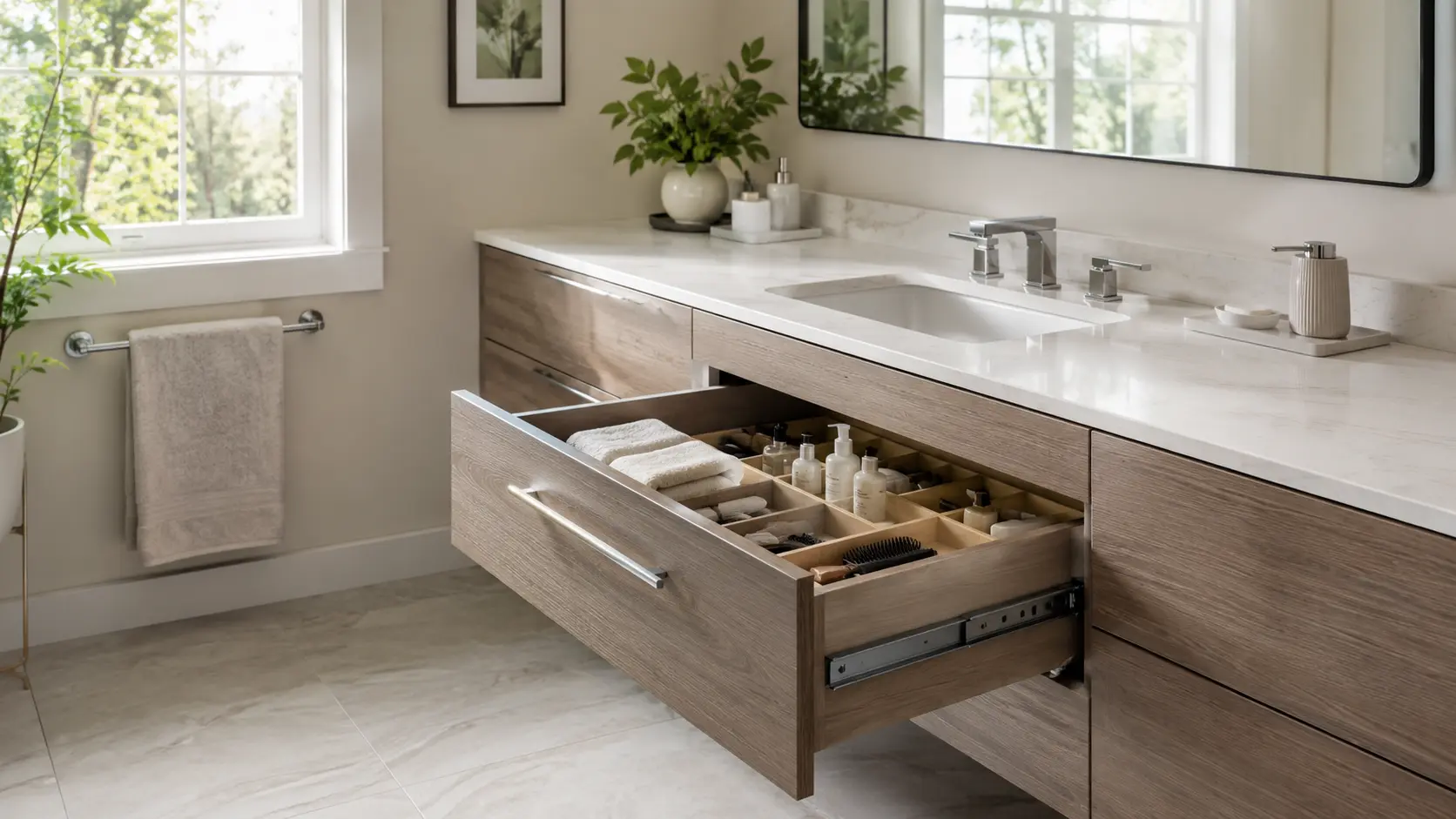
Soft-close bathroom vanity hardware improves daily use by making drawers and doors quieter, safer,
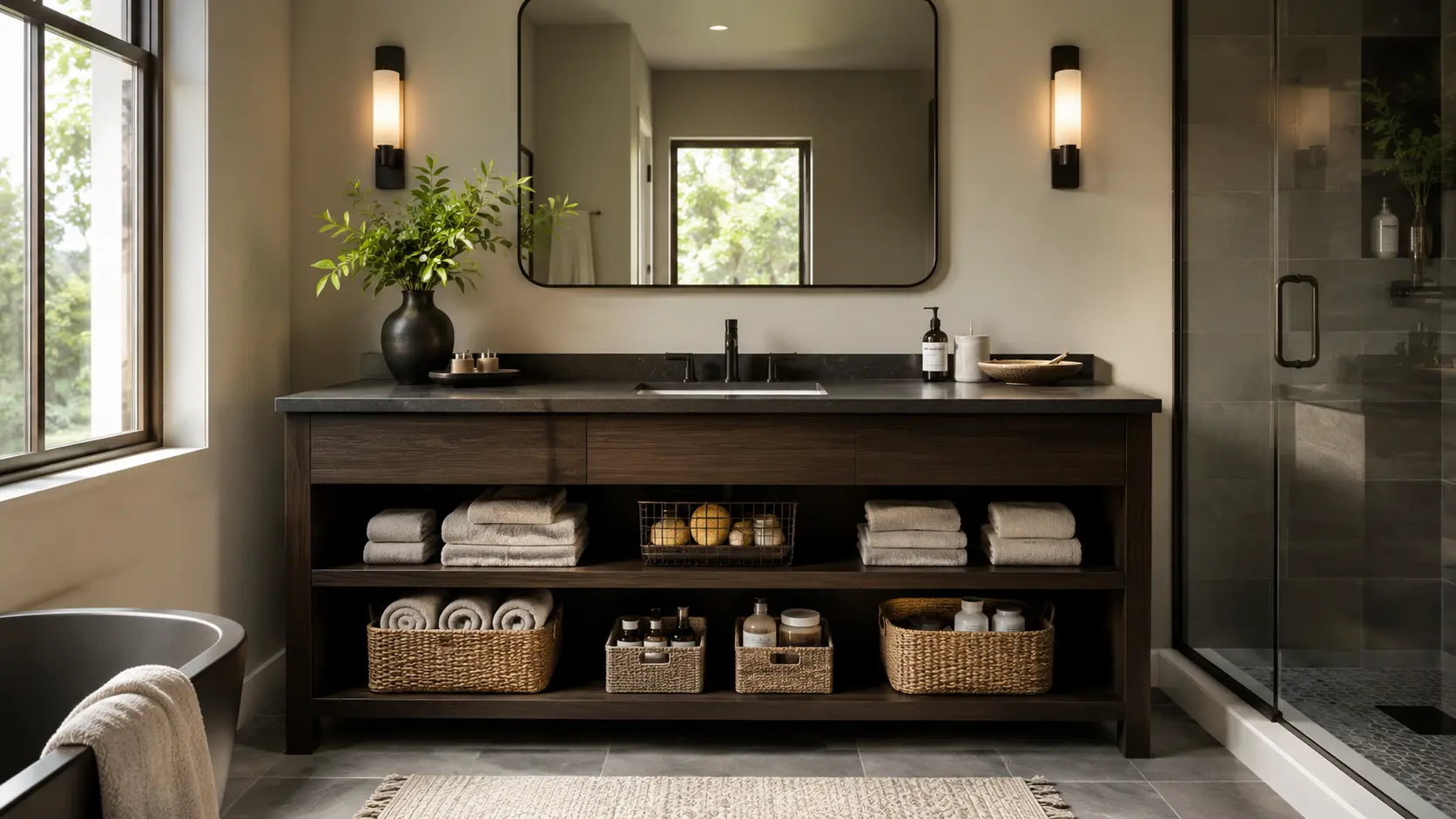
Open-shelf bathroom vanities influence storage and organization by making everyday items more visible, accessible,
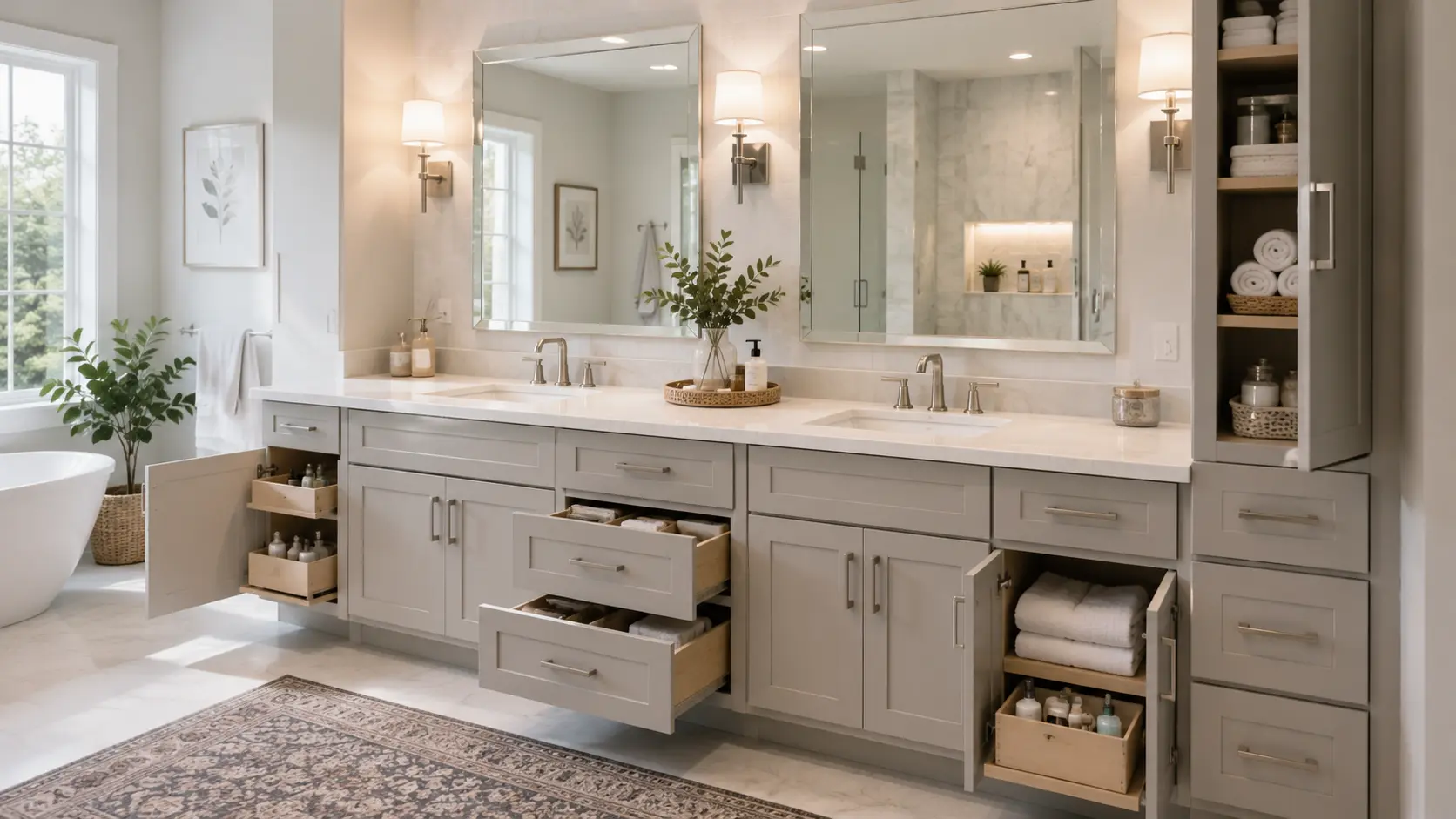
The right bathroom cabinets create more usable space around high-use vanities by keeping everyday
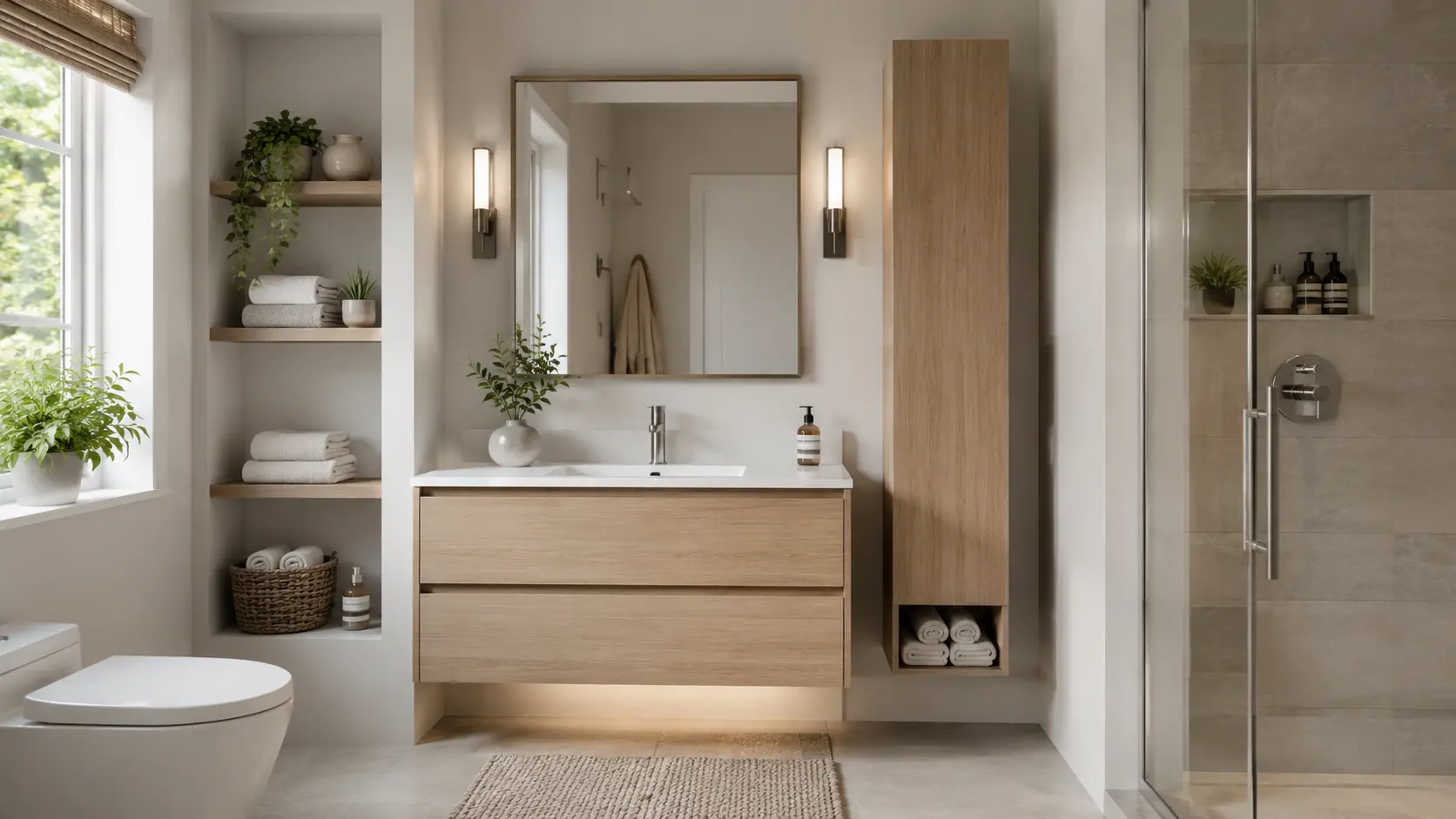
The bathroom cabinets that work best in bathrooms with limited wall space are floating
Cabinets and flooring are like the two main instruments in a kitchen design. One
A kitchen used by one person can be simple to plan. One cook moves
Your dream kitchen shouldn’t wait. We partner with leading financing providers to make your project more affordable. Split your purchase into manageable monthly payments that fit your budget, so you can start your renovation now.
Receive a custom pricing offer based on your project scope.
Get access to specialized account management.