

The six most common mistakes are choosing a finish from a small sample, picking a sheen by looks alone, overlooking moisture, treating paint and stain as equal, matching the finish to the wrong material or household, and never checking the finish up close. Each one is easy to avoid once you know what to look for. This guide covers all six for homeowners shopping for kitchen cabinets near Parma, with real numbers and simple checks you can use before you order.
Cabinets take up more visual space than almost anything else in a kitchen. The finish is the layer you see and touch every day.
Yet most people spend more time on door style than on the finish itself. That is where the trouble starts.
A finish does three jobs. It sets the color and the look. It protects the surface from grease, steam, and spills. And it decides how the cabinet ages.
A weak finish can make a well-built cabinet look worn in a few years. A strong one keeps a good cabinet looking good for a long time.
Northeast Ohio has humid summers and cold winters. Indoor heating dries the air for months, then summer puts the moisture back.
Wood and wood-based panels respond to those swings. A finish has to handle the movement, or it cracks and peels.
A kitchen in Parma Heights near Snow Rd and Pearl Rd deals with the same seasonal swings as every other home in the region. Knowing that makes the next six mistakes easier to spot.
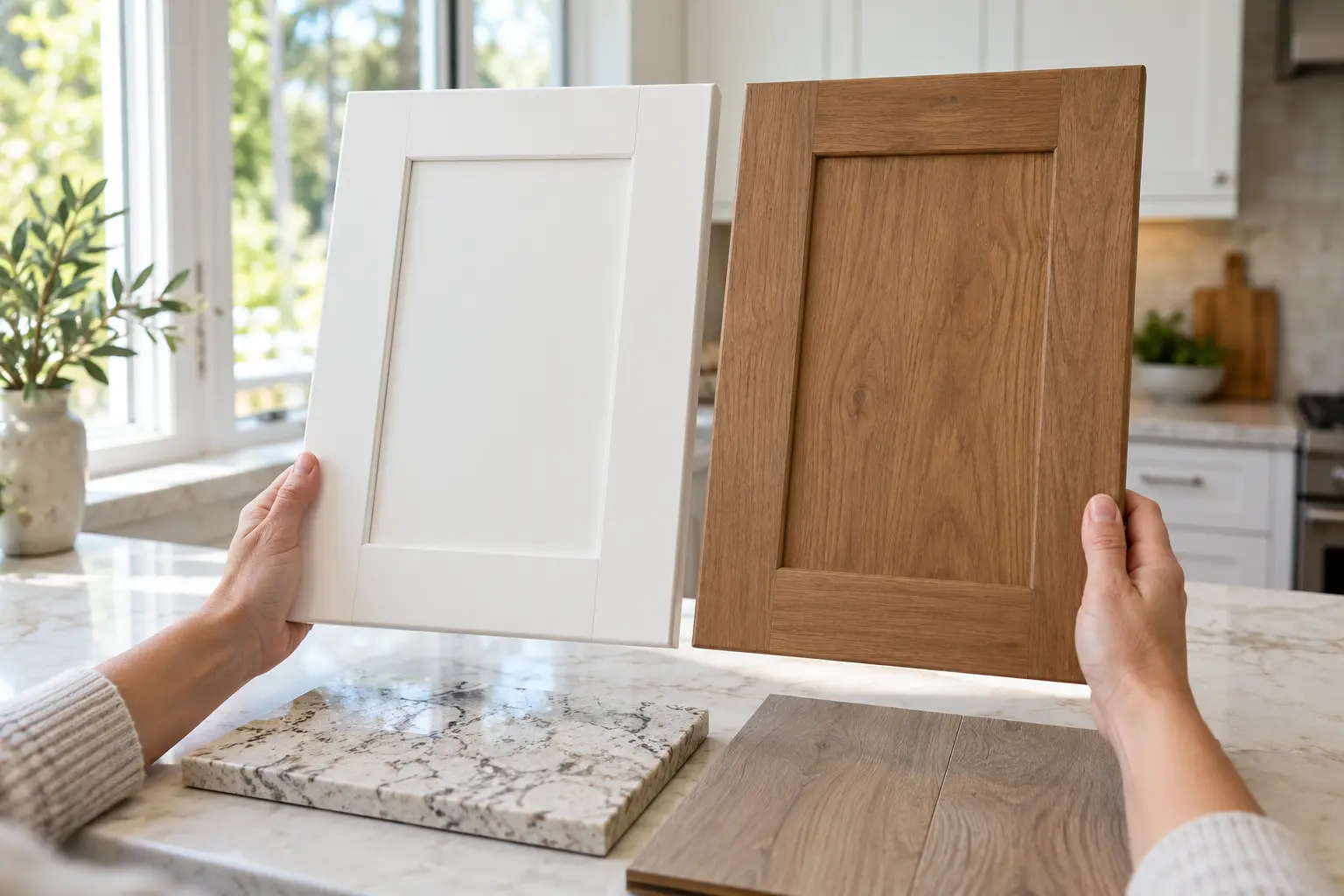
A two-inch color chip tells you very little. A photo on a screen tells you even less.
Color shifts with the light, the size of the surface, and what sits next to it. A soft white can look cream across a full run of doors. A gray can look blue by evening.
Screens change color. Every phone and monitor shows a slightly different version of the same finish.
Small chips also hide grain, texture, and sheen. You see color only. You do not see how the finish behaves across a large door.
Start with a full door sample, not a chip. Then check it in your own kitchen.
Look in the morning, at midday, and near sunset. A kitchen with a large window over the sink changes a lot through the day.
Look again at night under your actual lights. Warm bulbs pull a finish toward yellow. Cool bulbs push it toward blue.
Set the sample against the countertop, the flooring, and the wall color. A finish that looks good alone can clash in a group.
Homeowners shopping for kitchen cabinets near Parma can also bring photos of the room and compare finishes side by side. Seeing several finishes together removes a lot of guesswork.
Sheen is how much light a surface reflects. It runs from matte to satin to semi-gloss to gloss.
Looks matter, of course. But sheen also changes how easy a cabinet is to clean and how many flaws it shows.
Here is the basic trade. The more gloss a finish has, the tougher and easier to clean it tends to be. It also shows more imperfections.
Satin finishes reflect only about 25 to 35 percent of the light that hits them, which is why they hide fingerprints better than glossier finishes.
That one number explains a lot about daily life with each sheen.
Matte absorbs light and cuts glare. It hides fingerprints well and looks soft and modern.
The downside shows up in a busy kitchen. Matte can be harder to wipe clean and tends to scratch more easily.
Satin has a soft glow. It sits between matte and semi-gloss, and it forgives small flaws on the surface.
It wipes clean without much effort. That is why many homeowners treat satin as the safe middle choice.
Semi-gloss gives the easiest wipe-down and better moisture resistance. It also bounces light around, which helps in dark or windowless kitchens.
The trade is visibility. Semi-gloss shows dents, brush marks, and uneven surfaces. In a sunny kitchen it can also create glare. Gloss pushes all of that further and suits sleek, flat doors well.
Some homeowners use a tougher sheen on lower cabinets and satin on the uppers. Others pair a matte island with satin or semi-gloss cabinets around the walls.
Mixing can look great. Just keep the sheens close enough that the room still reads as one design.
A kitchen carries more moisture than almost any other room in the house. Sink splashes, dishwasher steam, and small leaks add up over years.
The finish is the first line of defense. Once water gets past it, the material underneath starts to take on damage.
Materials that stay damp for more than 24 to 48 hours become especially prone to mold, according to EPA (Environmental Protection Agency) guidance on mold and moisture control.
A wet cabinet bottom that sits for days is not a small problem.
Some spots take the brunt of it. The sink base is the obvious one. The panels beside the dishwasher get steam every cycle.
The toe kick, which sits at floor level, collects mop water and spills. Cabinets around the range and cooktop deal with steam and grease.
A finish seals the surface. But the material under it decides how the cabinet reacts when water gets through.
Particleboard swells and crumbles once it absorbs water. Plywood resists that damage far longer. Our guide to plywood and particleboard differences that matter when buying cabinets goes deeper on this.
Once a panel has swollen, refinishing the surface will not undo it. That is why moisture belongs on the checklist before color does.
Good habits help a finish last longer, whatever the type.
Paint and stain can look equally good on day one. They do not wear the same way.
One cabinet maker estimates that a painted finish lasts about 10 years, while a stained finish lasts about 20 to 30 years. Treat it as a rough guide, not a promise. Quality and care change the result.
The gap comes down to how each finish handles movement.
Paint sits on top of the surface as an opaque layer. It gives a clean, uniform color and hides grain and small flaws underneath.
But paint does not flex as wood expands and contracts. Over time that can lead to chips and hairline cracks, mostly at edges and joints.
Touch-ups can also be tricky. Paint changes slightly with light and age, so fresh paint may not match the original color or sheen.
Stain soaks into the wood instead of sitting on top. A clear topcoat does the protecting. Because the wood and the finish move together, stain tends to resist chipping.
Stain also shows grain, which hides small scratches well. Many scratches can be touched up with a stain marker.
The limits are real too. Stain offers fewer colors than paint, and it cannot hide flaws in the wood.
Neither finish is strong on its own. Surface prep and topcoat quality matter more than the label.
A thin or rushed topcoat fails early in either type. A well-applied factory finish can outperform a cheap finish of the “better” type.
A busy kitchen with kids and pets often does well with a medium to dark stain and visible grain. Small marks blend in.
A kitchen used mostly for entertaining and light cooking can keep a painted finish looking crisp for years. It comes down to how your household really lives.
A finish does not work alone. It depends on the material underneath and the people using the kitchen.
Stain needs a material with grain that takes color well. Trying to stain MDF (Medium-Density Fiberboard) gives muddy, uneven results that can peel within months.
Paint-grade materials suit an opaque finish. Paint also covers past damage, which makes it a smart choice for repaired or patched surfaces.
White and light cabinets show grease and splatter more than darker ones. That is most obvious beside the range and around the sink.
A tougher, easier-to-clean sheen helps here. Households that cook every day should weigh cleaning ease before color.
Dark navy and black cabinets look dramatic. They also show dust, fingerprints, and reflected texture more readily, especially in higher sheens.
Sheen changes the color itself. A deep navy can look nearly black in satin and more vibrant in semi-gloss.
Medium tones are the quiet workhorses. They hide crumbs, smudges, and small marks better than very light or very dark finishes.
Grain matters too. A high sheen over open grain, such as oak, can look busy because light catches every line.
Two cabinets can share a color name and still have very different finishes. The difference shows up in how thick the topcoat is, how well the edges are covered, and whether the interiors are finished at all.
Photos and spec sheets rarely show any of that. Your hands and eyes do.
Take a few minutes with a sample door and a full cabinet. These spots tell you the most.
Run a finger along the edges and corners. Look for thin spots, bare patches, or rough areas. Edges take the most wear, so they fail first.
Open a door and look inside. Ask whether the interior and any exposed sides are finished. Bare interior surfaces absorb moisture and wear faster.
Check around hinge cutouts and hardware holes. Finish often cracks or chips there first.
Homeowners shopping for kitchen cabinets can learn a lot from touching real cabinets. A local cabinet warehouse lets you compare sheens, edges, and interiors side by side.
It also lets you test a finish against your own countertop and flooring photos. That one step prevents many of the mistakes above.
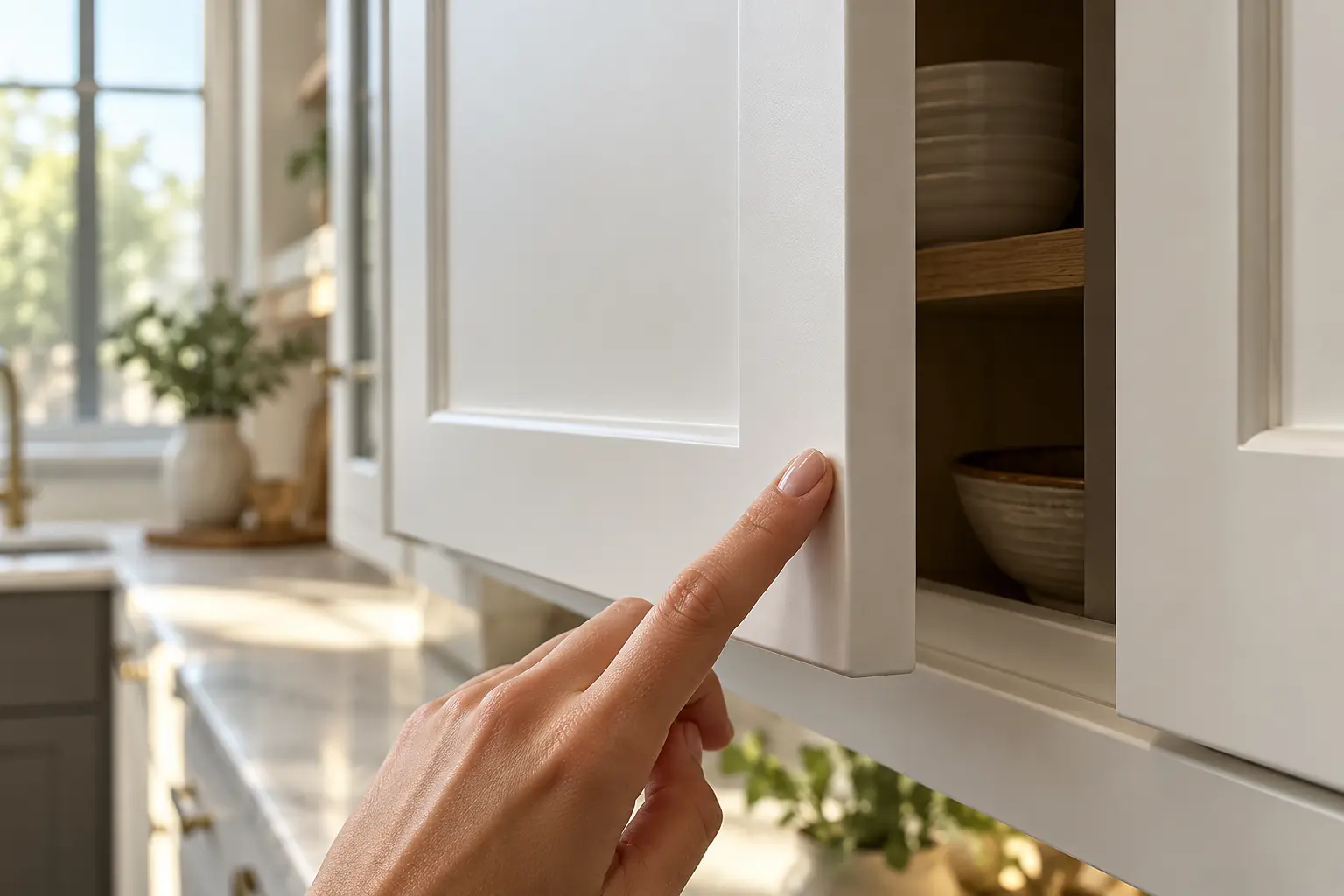
Picking the right finish is half the job. Daily care decides how long it keeps working.
Use a soft cloth, warm water, and a drop of mild dish soap. Wipe in the direction of the grain, then dry the surface right away.
Skip abrasive pads and harsh chemical cleaners. They dull sheen and can wear through a topcoat over time.
Appliances that give off steam or heat can stress a finish next to them. Use the range hood fan when you boil or simmer, and open the dishwasher door a little after a cycle so steam can escape.
Small habits like these protect the cabinets closest to your hardest-working appliances.
A small chip or scratch is easy to fix when it is new. Left alone, it lets moisture reach the material underneath.
Keep touch-up supplies from the original order if you can. Matching sheen and color is much easier with the original product than with a guess from a hardware aisle.
Use this list before you place an order.
Seven checks, six mistakes. If you can answer all seven, you are in good shape.
A cabinet finish is easy to get wrong because the mistakes hide in plain sight. A chip looks fine. A photo looks fine. The problems show up months later.
The fix is not complicated. Test big samples in your own light. Match sheen to daily use. Protect the wet zones. Choose paint or stain with your household in mind. Then check the finish up close before you commit.
Homeowners around Parma Heights who follow those steps tend to end up with kitchens that still look good years later. That is the goal for any kitchen in Northeast Ohio.
RTA Cabinets Ohio serves homeowners in Parma Heights and across the wider Parma area from its real warehouse in Cleveland. Parma Heights sits near Evergreen Lake and the Snow Rd and Pearl Rd crossing, at coordinates 41.4050425, -81.7460591, and the warehouse is a short drive from there.
Get Kitchen Cabinets near Parma Heights Services Now
For directions and reviews, find kitchen cabinets near Parma on Google.
What is the most durable kitchen cabinet finish?
There is no single winner. A quality factory finish with a strong topcoat lasts longest, and semi-gloss gives the toughest, easiest-to-clean surface. Stain also tends to outlast paint because it moves with the wood.
Is satin or semi-gloss better for kitchen cabinets?
It depends on your kitchen. Satin hides fingerprints and small flaws, while semi-gloss wipes clean more easily and resists moisture better. Many homeowners choose satin for looks and semi-gloss for heavy-use areas.
Should kitchen cabinets be painted or stained?
Paint gives a solid, uniform color and covers flaws. Stain shows grain and tends to age more gracefully. Choose based on the material, your style, and how hard the kitchen works.
How long does a kitchen cabinet finish last?
One cabinet maker estimates about 10 years for paint and 20 to 30 years for stain. Quality, prep, and daily care change the result in any kitchen.
Which cabinet finish hides fingerprints?
Matte and satin finishes hide fingerprints better than semi-gloss or gloss. Medium tones with visible grain also hide smudges and small marks well.