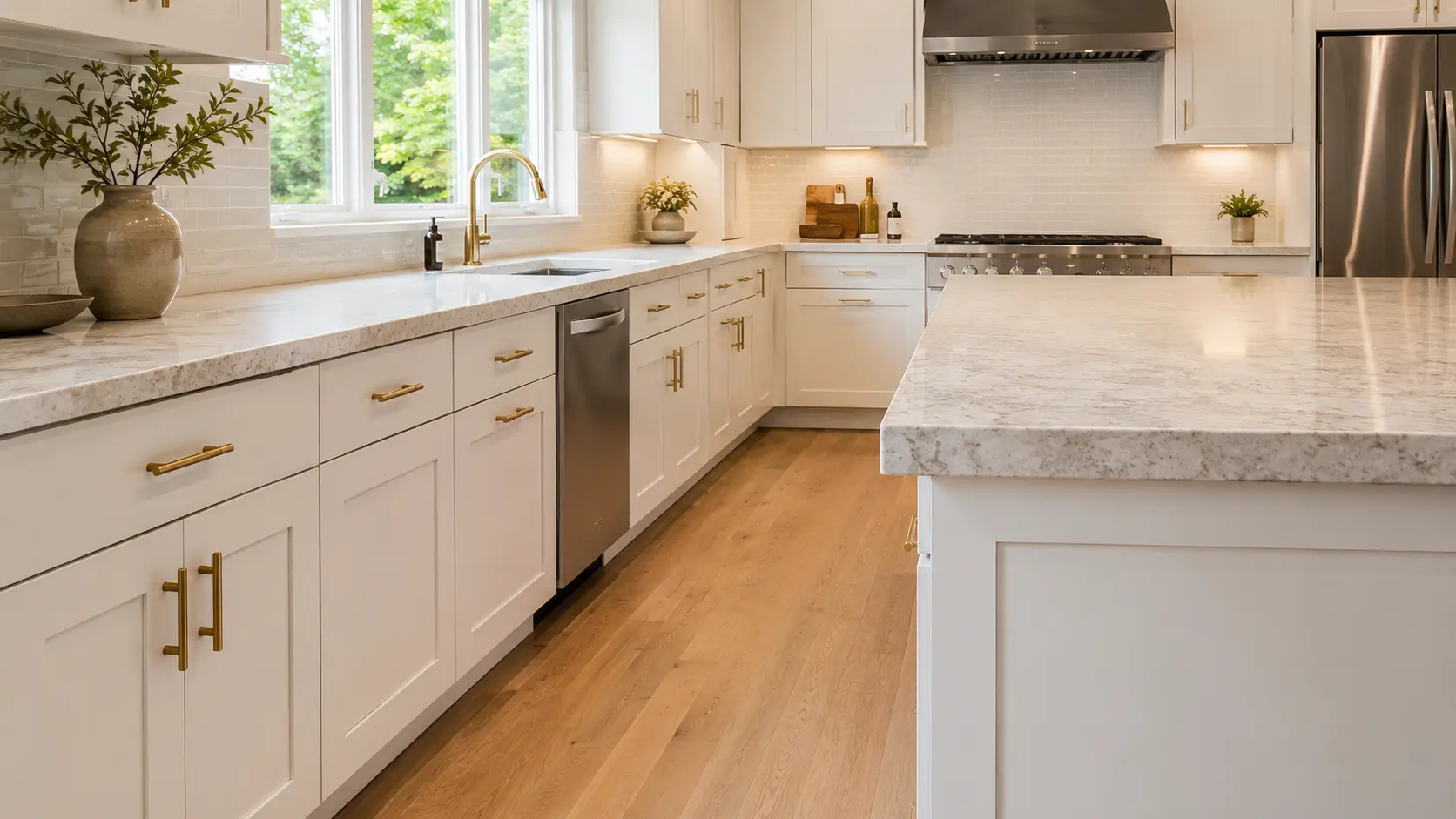
Heavy countertop materials such as quartz and granite rely on much more than their own durability. They also depend on the strength of the cabinets underneath. Assembled Kitchen Cabinets near Parma support these stone surfaces by providing a rigid framework that distributes weight evenly across the entire cabinet system. When cabinets are built with durable materials, reinforced frames, secure joints, and proper installation methods, they create a stable foundation capable of supporting hundreds of pounds without unnecessary movement or stress.
Rather than acting as simple storage boxes, kitchen cabinets function as the structural base of the countertop system. Every cabinet contributes to carrying the weight above it while helping maintain a level surface from one end of the kitchen to the other. This combination of strength, alignment, and proper construction helps prevent issues such as countertop shifting, uneven pressure, or long-term structural strain.
Many homeowners researching Assembled Kitchen Cabinets focus on cabinet styles, finishes, or storage features. However, the engineering behind the cabinet box is equally important, especially when heavy natural or engineered stone countertops are part of the kitchen design. Understanding how these cabinets provide structural support offers a better appreciation of the role they play in creating a durable kitchen. Educational resources from manufacturers such as RTA Cabinets Ohio often highlight cabinet construction methods because structural integrity is a key part of long-term kitchen performance.
Quartz and granite countertops are known for their beauty and durability, but they also introduce significant weight into a kitchen. Unlike laminate or lightweight surfaces, natural and engineered stone places continuous downward pressure on the cabinet system every day. Cabinets are designed to receive that load and transfer it evenly to the floor through their sides, base, and support structure.
This relationship means the countertop and cabinets work together as one complete system. A high-quality countertop performs best when it rests on cabinets that remain level, rigid, and properly secured. Even the strongest stone slab can experience unnecessary stress if the supporting cabinets are not installed correctly or lack sufficient structural strength.
Cabinet strength becomes especially important before the countertop is ever placed in position. Once a quartz or granite slab is installed, making adjustments becomes much more difficult. The cabinet system must already provide a stable, level, and properly reinforced platform that can support substantial weight for many years.
Strong cabinet construction reduces the likelihood of uneven settling, twisting, or shifting over time. This stability protects not only the countertop but also cabinet doors, drawers, and hardware that depend on accurate alignment to operate smoothly throughout daily use.
Quartz is manufactured by combining crushed natural quartz with durable resins and pigments. The finished product creates a dense, nonporous surface that offers impressive strength while also carrying considerable weight. A standard quartz countertop may weigh between twenty and twenty-five pounds per square foot depending on its thickness and composition.
That weight is spread across the cabinet system rather than resting on one individual cabinet. Properly assembled cabinets distribute this load evenly through connected cabinet boxes, allowing the entire installation to function as one supportive framework instead of isolated pieces.
Granite is a naturally occurring stone that often weighs even more than engineered quartz. Since every slab contains unique mineral compositions, the exact weight varies, but granite consistently requires a stable support system beneath it.
Because granite slabs are rigid, they perform best when fully supported across their length. Small gaps or uneven cabinet surfaces may create concentrated pressure points. A properly assembled cabinet system minimizes these risks by maintaining consistent support from one end of the countertop to the other.
One reason Assembled Kitchen Cabinets are well suited for supporting heavy countertops is their complete factory assembly. Instead of arriving as separate panels that require extensive construction on site, assembled cabinets are manufactured using carefully aligned joints, durable fasteners, and reinforced connections before installation.
Factory assembly also allows manufacturers to maintain consistent quality throughout production. Every cabinet is built according to precise measurements, helping ensure that adjoining cabinets align properly once installed. This consistency contributes to better weight distribution beneath heavy countertop materials.
Fully assembled cabinets arrive with major structural components already secured together. Side panels, tops, bottoms, and face frames are connected using construction techniques designed to resist movement under everyday loads.
Because the cabinet box is already rigid, installers spend less time assembling structural components and more time focusing on accurate leveling and secure installation. This helps preserve the overall strength of the cabinet while preparing it for countertop installation.
Many assembled cabinets include reinforced face frames that increase rigidity across the front of the cabinet. These frames help maintain the cabinet’s shape while supporting both countertop weight and daily use.
Reinforced framing also improves resistance to twisting forces that may develop over time. As cabinets expand and contract slightly with seasonal humidity changes, a strong frame helps maintain consistent alignment throughout the kitchen.
The cabinet box forms the primary structural component responsible for supporting heavy countertops. High-quality cabinet boxes often use plywood or durable engineered wood products that provide excellent strength while maintaining dimensional stability.
Thicker side panels and properly secured joints help the cabinet resist bending under constant loads. Combined with reinforced shelving and strong corner connections, these materials contribute to a cabinet system capable of supporting substantial countertop weight without compromising overall stability.
When comparing cabinet construction materials, understanding the plywood and particleboard differences can help explain why some cabinet boxes provide greater long-term strength and stability for heavy countertops. Material selection plays an important role in durability, moisture resistance, and overall structural performance.
Proper cabinet leveling is one of the most important steps in supporting heavy stone countertops. Even the strongest cabinet construction cannot perform as intended if the cabinets are not installed on a perfectly level plane. Since quartz and granite are rigid materials, they rely on uniform support across their entire surface rather than isolated contact points.
Level cabinets create a continuous foundation that allows the countertop to sit evenly from one end of the kitchen to the other. This balanced support helps preserve the structural integrity of both the cabinets and the countertop throughout years of everyday use.
Every cabinet within a kitchen contributes to supporting the countertop above it. When cabinets are level, the countertop transfers its weight evenly across the entire cabinet system instead of concentrating pressure in only a few locations.
Balanced weight distribution reduces unnecessary stress on cabinet joints, face frames, and side panels. It also allows the floor beneath the cabinets to share the load evenly, improving the overall stability of the installation.
Small variations in cabinet height may seem insignificant during installation, but they can create concentrated stress once a heavy countertop is installed. Stone materials are designed to withstand compression, yet uneven support may increase pressure in isolated areas.
Professional installers carefully check cabinet alignment before placing countertops to eliminate these stress points. A properly leveled cabinet system allows the countertop to rest naturally without forcing the stone to compensate for uneven surfaces.
Cabinet back panels contribute much more than simply enclosing the rear of the cabinet. They provide additional rigidity that helps prevent the cabinet box from flexing under heavy loads. Strong back panels also improve the cabinet’s ability to remain square after installation.
Corner supports play an equally valuable role by reinforcing the cabinet where multiple structural members meet. Since corners experience forces from different directions, additional reinforcement helps maintain stability when supporting dense countertop materials.
Together, these structural components strengthen the cabinet as a complete unit. Rather than relying on a single panel or fastener, the cabinet distributes loads through multiple interconnected parts that work together to resist movement.
Fasteners often receive little attention, yet they are essential to the long-term performance of assembled cabinets. Screws, dowels, brackets, and specialized connectors secure cabinet components together while helping the cabinet resist twisting, separation, and shifting under continuous weight.
Quality fasteners also improve the connection between neighboring cabinets. When individual cabinets become securely joined, they function as one larger structural system instead of separate boxes carrying independent loads.
Although base cabinets primarily transfer weight directly to the floor, securely attaching them to wall studs improves overall stability. Wall fasteners help prevent cabinets from moving during everyday kitchen activities while maintaining consistent alignment throughout the installation.
Proper wall attachment also reduces the likelihood of gradual shifting that may occur over years of repeated opening, closing, loading, and unloading of cabinets and drawers.
Individual cabinets become significantly stronger when they are securely fastened together. Connecting neighboring cabinets creates a continuous support system that distributes countertop weight across multiple cabinet boxes rather than concentrating it on one unit.
This unified structure also improves alignment across long cabinet runs. Drawer fronts, doors, and countertop seams benefit from the additional stability created when cabinets work together as one connected framework.
Base cabinets perform the majority of the structural work in a kitchen because they directly support the countertop. Unlike wall cabinets, which primarily provide storage, base cabinets transfer the countertop’s weight to the floor through their sides, bottom panels, and toe-kick structure.
Each cabinet contributes to supporting a portion of the countertop rather than carrying the entire load alone. This shared responsibility allows heavy quartz and granite surfaces to remain stable while reducing stress on individual cabinet components.
The design of base cabinets also considers everyday household activities. In addition to supporting countertops, they routinely carry cookware, dishes, appliances, pantry items, and other stored materials. Their construction reflects these combined demands by incorporating durable materials and reinforced structural elements.
Kitchen cabinets experience changing environmental conditions throughout their lifespan. Seasonal humidity, temperature fluctuations, and daily household use all influence how cabinet materials respond over time. Well-designed assembled cabinets account for these factors by using construction methods that minimize movement while maintaining structural stability.
Reducing long-term movement is especially important when supporting heavy stone countertops. Even small changes in cabinet alignment can affect countertop performance, making durable cabinet construction an essential part of the overall kitchen system.
Moisture is a natural part of every kitchen environment. Steam from cooking, occasional spills, and changing humidity levels expose cabinets to conditions that may influence certain materials over time.
Many quality cabinet materials are selected because they maintain their shape more consistently when exposed to normal indoor moisture conditions. Stable materials help preserve cabinet alignment, which in turn supports the countertop more effectively throughout years of regular use.
Kitchen cabinets support much more than countertops alone. Pots, pans, small appliances, dishes, food storage containers, and other household items create additional loads that cabinets must carry every day.
Strong cabinet construction allows these everyday loads to be handled alongside the weight of heavy countertops without excessive flexing. This balanced performance contributes to long-term durability while helping maintain proper door alignment, drawer operation, and overall cabinet stability.
Even exceptionally well-built cabinets depend on proper installation to perform at their highest level. Accurate measurements, careful leveling, secure fastening, and thoughtful planning all contribute to a cabinet system capable of supporting heavy quartz or granite countertops safely.
Professional installation focuses on creating a continuous structural foundation rather than simply positioning cabinets within the room. Each cabinet must align with neighboring units while remaining securely connected to both the floor and surrounding structure where appropriate.
Installation also includes checking for gaps, verifying cabinet heights, confirming level surfaces, and ensuring every cabinet shares the countertop load evenly. These careful adjustments help maximize the structural benefits designed into assembled cabinet construction.
One common misconception is that countertops support themselves because stone materials are naturally strong. In reality, quartz and granite depend almost entirely on the cabinet system beneath them for continuous support throughout their lifespan.
Another misunderstanding is that only the cabinets located directly beneath the heaviest section of countertop carry the load. In practice, properly connected cabinets distribute weight across the entire installation, allowing multiple cabinets to share the responsibility rather than placing excessive stress on one location.
Some homeowners also assume thicker countertops always require additional cabinet reinforcement. While countertop thickness influences overall weight, cabinet design, installation quality, material selection, and proper weight distribution all work together to determine the support system’s effectiveness.
Selecting cabinets that can support heavy stone countertops begins with understanding how the entire cabinet system functions rather than focusing on appearance alone. Structural design, material quality, cabinet dimensions, and installation accuracy all contribute to the cabinet’s ability to provide dependable support for quartz and granite surfaces.
Homeowners researching Assembled Kitchen Cabinets near Parma often compare finishes, colors, and storage options first. While these design features certainly influence the final look of a kitchen, the cabinet’s internal construction plays an equally important role. Strong cabinet boxes, reinforced face frames, durable back panels, and secure joints help create a stable platform that supports significant weight without sacrificing long-term performance.
Cabinets should also work together as a complete system. Matching cabinet heights, consistent construction methods, and properly connected units allow the countertop load to be shared evenly throughout the kitchen. This coordinated approach reduces stress on individual cabinets while helping preserve countertop alignment over many years of regular use.
Cabinet finishes may attract the most attention during the planning process, but construction quality ultimately determines how well the cabinets perform beneath heavy countertops. Internal reinforcement, accurate assembly, and durable materials create the structural foundation needed for long-lasting support.
Quality construction also improves everyday durability. Cabinet doors remain aligned more consistently, drawers operate smoothly, and the overall cabinet system is better prepared to handle both countertop weight and daily household activities without excessive movement.
Kitchen layouts vary widely, and cabinet placement affects how countertop weight is distributed. Long cabinet runs, corner cabinets, sink bases, and appliance openings each contribute differently to the overall support system.
Designers and installers consider these layout variations when planning cabinet placement. Proper spacing and alignment help ensure that every section of the countertop receives adequate support, including areas surrounding sinks, cooktops, and corners where structural demands may differ.
Modern kitchens include many features that interact with the cabinet system. Islands, peninsulas, breakfast bars, and extended countertop overhangs all introduce unique structural considerations that require careful planning.
For example, a kitchen island supporting a large quartz slab depends entirely on the stability of the base cabinets beneath it. Since islands are not attached to surrounding walls in the same way as perimeter cabinets, accurate leveling and secure cabinet connections become even more important.
Similarly, countertop overhangs often require additional support depending on their length and intended use. Reinforcement may come from cabinet design, support brackets, or other structural elements that help maintain countertop stability while preventing unnecessary stress on the stone.
Although assembled cabinets are designed for long-term durability, routine maintenance contributes to their continued performance. Keeping cabinets clean, addressing water spills promptly, and checking for loose hardware helps preserve their structural integrity over time.
Periodic inspection also allows homeowners to identify minor issues before they develop into larger concerns. Tightening loose hinges, adjusting drawer hardware, or correcting small alignment changes helps maintain the cabinet system that supports the countertop.
Normal household care does not require extensive maintenance procedures. Instead, consistent attention to everyday cleanliness and proper use allows cabinets to continue providing reliable support throughout years of kitchen activity.
A properly supported countertop remains more stable throughout its lifespan because the cabinet system beneath it continues to distribute weight effectively. Stable cabinets reduce unnecessary movement, helping preserve countertop seams, backsplashes, and adjacent finishes.
Long-term structural stability also contributes to smoother cabinet operation. Doors continue closing properly, drawers remain aligned, and the kitchen maintains its overall appearance despite years of daily use. While no building material remains completely unchanged forever, thoughtful cabinet construction helps minimize the effects of normal household wear.
Educational resources provided by manufacturers, including RTA Cabinets Ohio, often emphasize cabinet construction because long-term stability depends on much more than visible design elements. Understanding these structural principles allows homeowners to appreciate how cabinets and countertops function together as one integrated system.
RTA Cabinets Ohio is dedicated to serving the diverse needs of the Parma community with high-quality RTA cabinets, including individuals residing in neighbourhoods like Parma Heights. With its convenient location near landmarks such as the Jerry Stano Park and major intersections like Snow Road and Ridge Road (Latitude: 41.4050425, Longitude: -81.7260532), we provide assembled kitchen cabinets.
Get Assembled Kitchen Cabinets in Parma Heights Now
Call Us or Contact Us (216) 304-2020
Heavy quartz and granite countertops rely on far more than the strength of the stone itself. Their long-term performance depends on a carefully constructed cabinet system that provides consistent support across the entire kitchen. Assembled Kitchen Cabinets near Parma achieve this through durable cabinet boxes, reinforced frames, secure fasteners, proper leveling, and accurate installation techniques that work together to distribute substantial weight evenly.
Every component contributes to the finished result. Strong materials improve rigidity, connected cabinet units share loads efficiently, and level installation prevents unnecessary pressure from developing beneath the countertop. Rather than acting as simple storage furniture, assembled cabinets serve as the structural foundation that allows heavy stone countertops to perform reliably for many years.
Understanding these construction principles helps explain why cabinet engineering is such an important part of kitchen design. When cabinets are built and installed correctly, they create the stable base required for quartz and granite surfaces to maintain their appearance, alignment, and durability throughout everyday household use.
Yes. Properly constructed assembled kitchen cabinets are designed to provide continuous support for quartz countertops by distributing their weight across multiple connected cabinet units. Stable construction and correct installation are equally important for achieving long-term performance.
Granite is a dense natural stone that places considerable weight on the cabinet system beneath it. Strong cabinets help distribute this weight evenly while reducing stress on both the countertop and the surrounding kitchen structure.
Absolutely. Level cabinets create a uniform surface that supports the countertop evenly from end to end. Proper leveling helps prevent concentrated pressure points that could affect long-term countertop stability.
Several features work together, including reinforced face frames, durable cabinet box materials, secure joints, strong back panels, quality fasteners, and properly connected cabinet units. Each component strengthens the overall support system.
Yes. In a properly installed kitchen, connected base cabinets work together to distribute countertop weight across the entire cabinet system rather than placing excessive pressure on a single cabinet. This shared support improves stability and contributes to long-term structural performance.
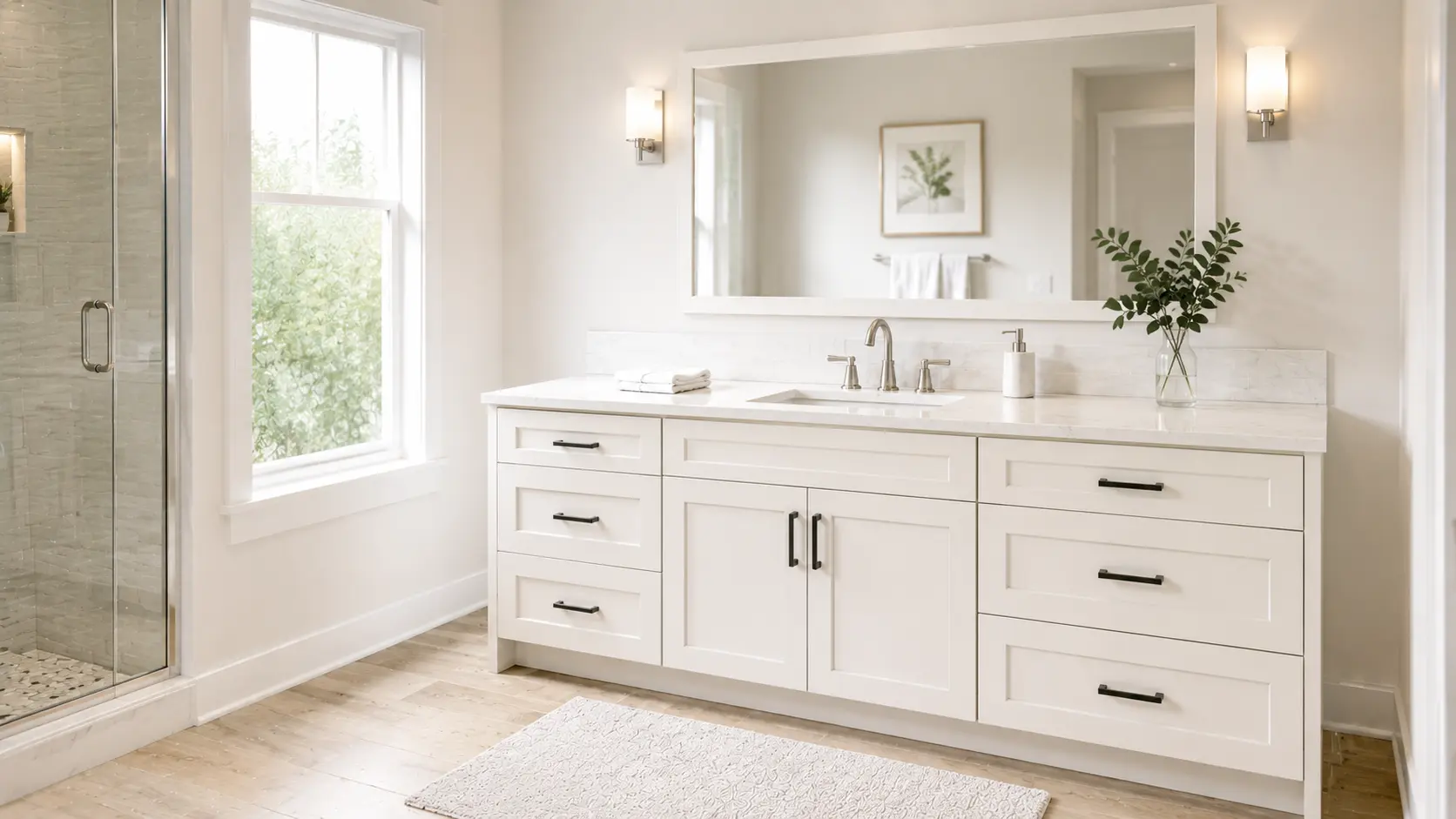
Sink depth has a direct influence on how comfortable, practical, and easy a bathroom
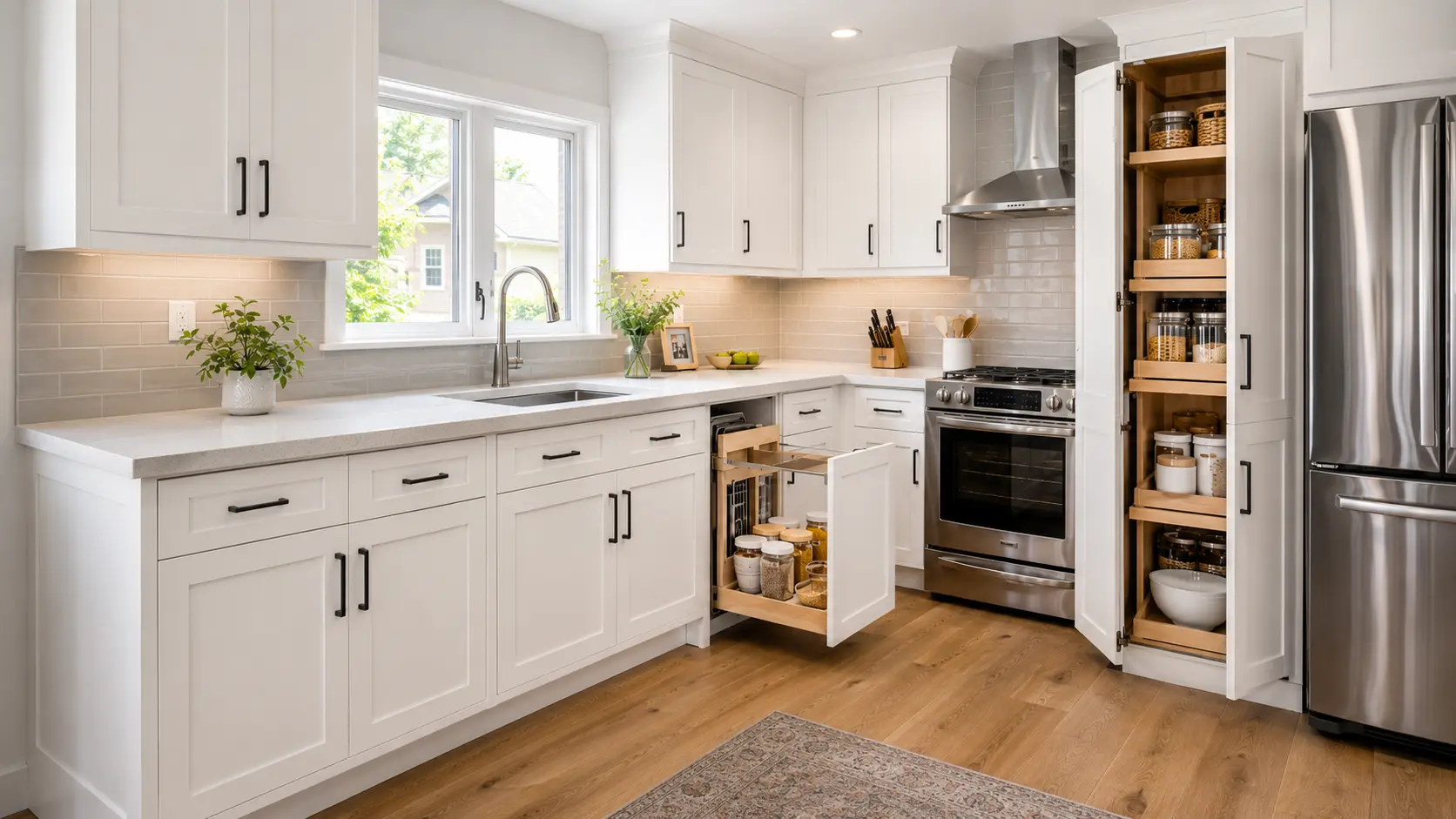
The most valuable storage features to prioritize with Affordable Kitchen Cabinets near Parma are
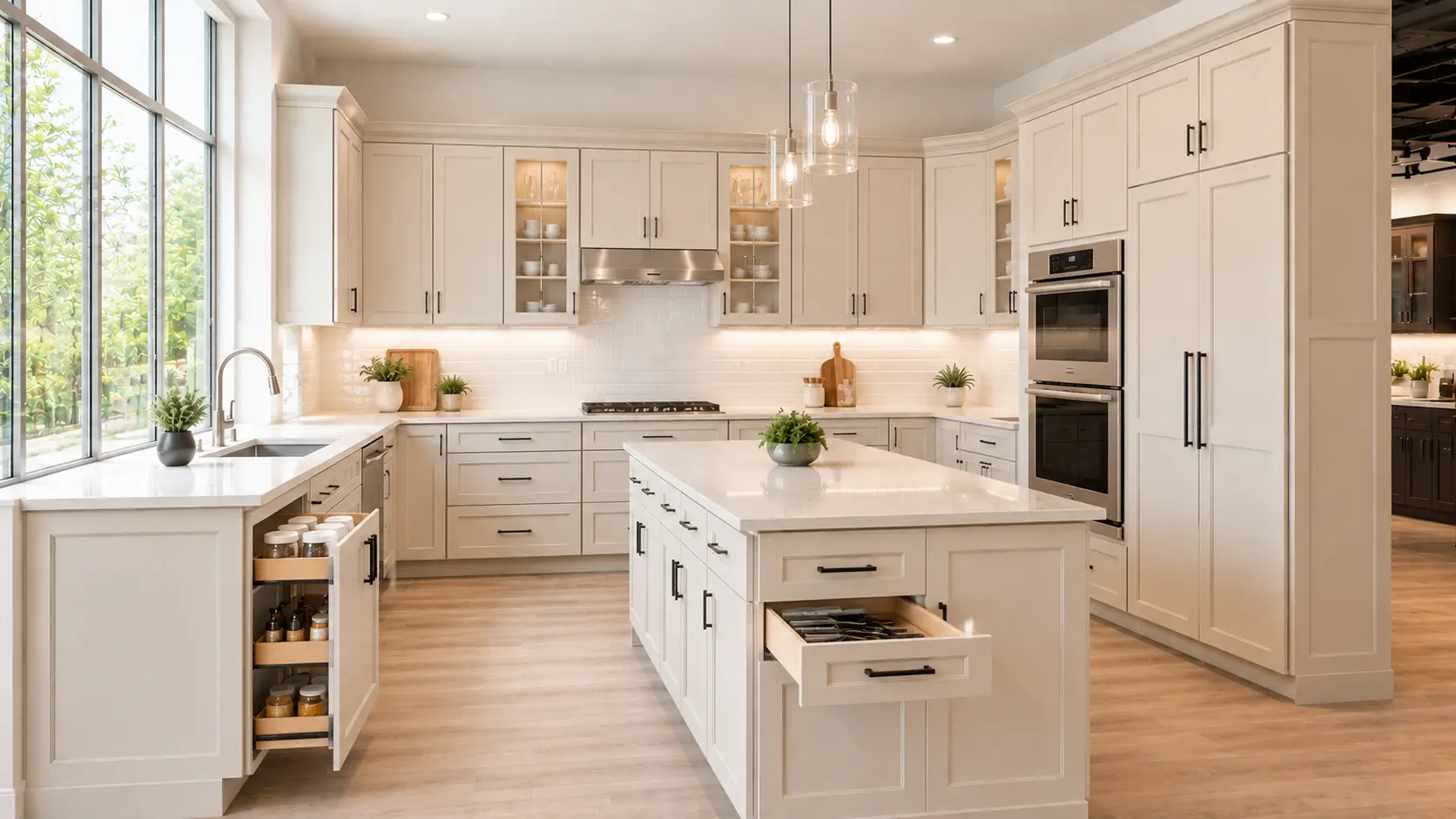
Homeowners can find cabinet layout inspiration by studying full-size kitchen displays, comparing different floor
Heavy countertop materials such as quartz and granite rely on much more than their
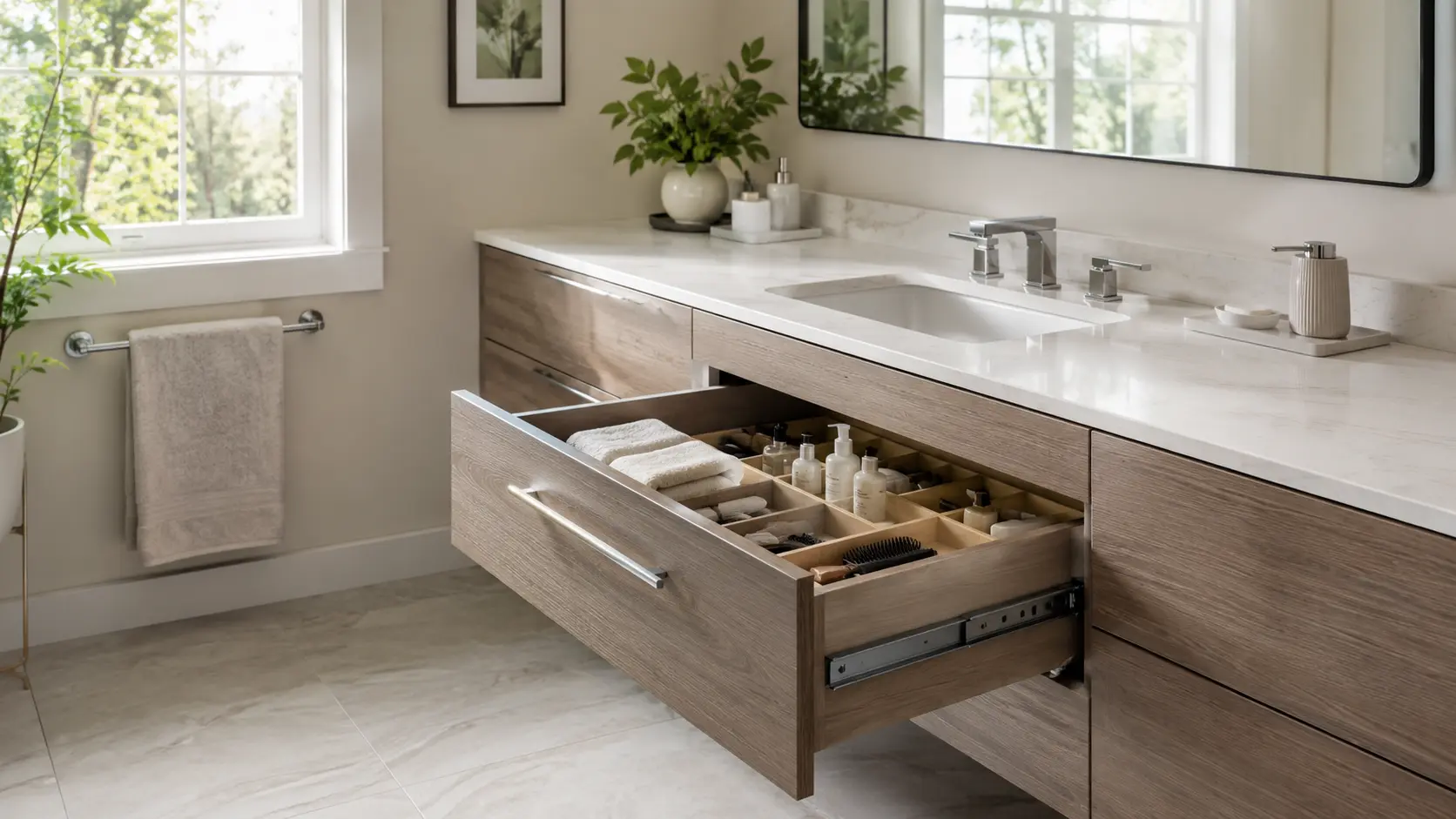
Soft-close bathroom vanity hardware improves daily use by making drawers and doors quieter, safer,
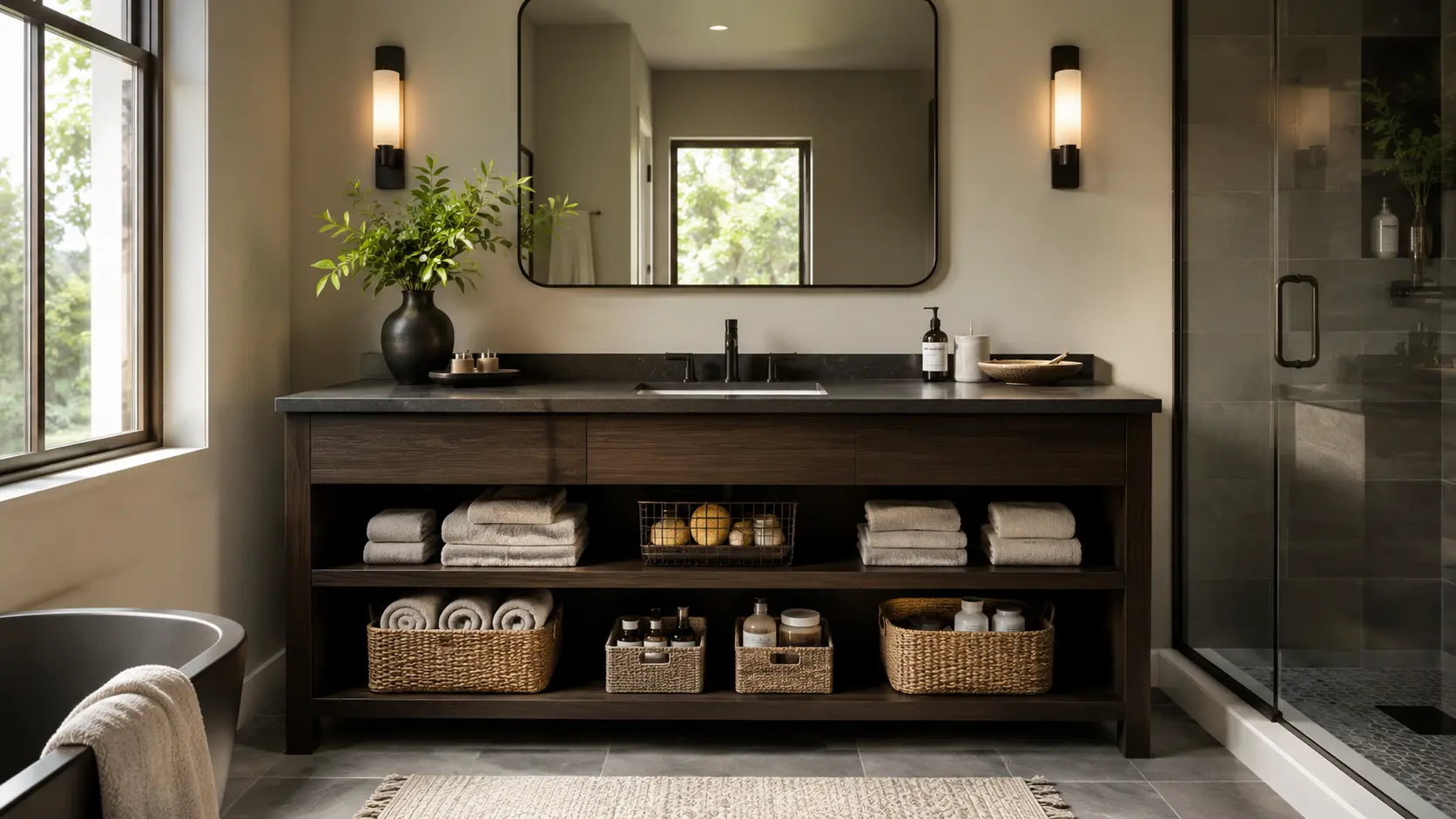
Open-shelf bathroom vanities influence storage and organization by making everyday items more visible, accessible,
Your dream kitchen shouldn’t wait. We partner with leading financing providers to make your project more affordable. Split your purchase into manageable monthly payments that fit your budget, so you can start your renovation now.
Receive a custom pricing offer based on your project scope.
Get access to specialized account management.