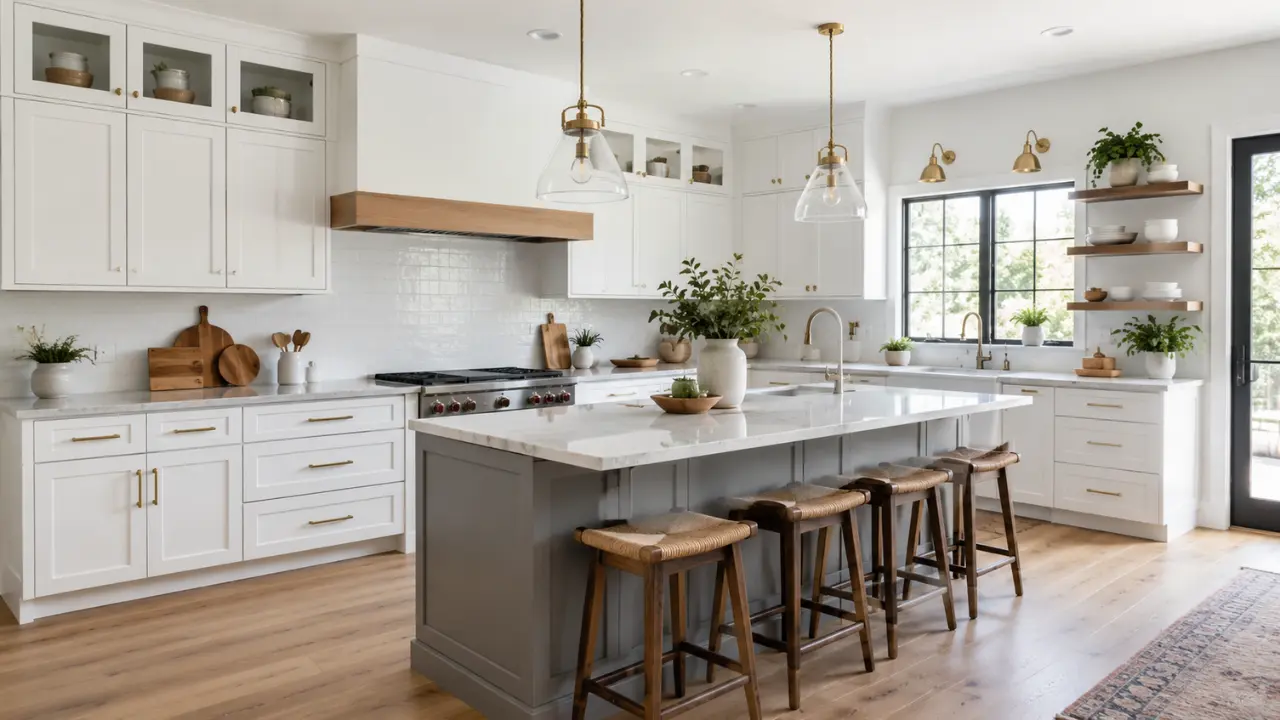
If you have spent any time looking at kitchen design trends over the past decade, you have noticed white Shaker cabinets everywhere. They appear in modern farmhouses, urban lofts, suburban renovations, and coastal cottages. But there is one design style where white Shaker cabinets truly shine, and that is the transitional kitchen.
Transitional design sits right in the middle of traditional and contemporary. It takes the warmth and comfort of traditional style and pairs it with the clean lines and simplicity of modern design. The result is a kitchen that feels current but not cold, classic but not stuffy.
But not every white Shaker cabinet is the same. Variations in door profile, finish sheen, hardware pairing, and configuration choices determine whether your kitchen reads as truly transitional or leans too far in one direction. Understanding those variations helps you select the right RTA white Shaker cabinets for your space.
Before we dig into cabinet styles, let us get clear on what transitional design actually means.
Traditional kitchens feature ornate details. Raised panel doors, decorative corbels, furniture style feet, and elaborate moldings. These kitchens feel warm and familiar, but they can also feel heavy and dated.
Modern kitchens take the opposite approach. Flat slab doors, handleless designs, high gloss finishes, and minimal ornamentation. These kitchens feel sleek and current, but they can also feel cold and impersonal.
Transitional kitchens split the difference. The cabinet door has some detail, like a recessed Shaker panel, but no ornate carving. The finish has some warmth, but it is not heavy or distressed. The hardware has some presence, but it is not overly decorative. The space feels balanced, comfortable, and timeless.
Balance is the key word in transitional design. Every element should feel carefully considered but not forced. A transitional kitchen does not scream for attention. It invites you in with quiet confidence.
White Shaker cabinets support this balance because they do not dominate the room. They provide a clean, neutral backdrop that lets other elements like countertops, backsplashes, and lighting take turns being the star. On days when you want the room to feel bright and airy, the white cabinets lead. On days when you want the wood tones of the floor or the texture of the tile to stand out, the white cabinets recede. That flexibility is the hallmark of transitional design.
You could choose other cabinet styles for a transitional kitchen, but white Shaker has become the default for good reasons.
The Shaker door profile dates back to the mid 18th century. Shaker communities valued simplicity, utility, and honest craftsmanship. Their furniture had no unnecessary ornamentation. That philosophy aligns perfectly with transitional design, which also avoids excessive decoration.
A Shaker door has a flat center panel recessed within a flat frame. The recess is typically around one quarter to three eighths of an inch deep. That small detail provides visual interest without being busy. It catches light and shadow in a way that flat slab doors cannot.
White is the ultimate neutral. It does not compete with other colors. It does not clash with wood tones. It does not fight with patterned tile. A white cabinet allows you to change your countertops, backsplash, and hardware over time without needing to replace the cabinets. That longevity is part of why transitional design works so well. The foundation stays constant while the accents evolve.
White Shaker cabinets work with virtually any countertop material. White quartz with gray veining. Butcher block in warm oak. Soapstone in charcoal gray. Marble with soft blue undertones. The white finish provides a clean transition between all of them.
White Shaker cabinets also work with any flooring. Wide plank white oak. Porcelain tile that mimics natural stone. Dark walnut. Painted wood. The cabinets do not fight with the floor because white does not have a strong color temperature. It simply exists alongside the other elements.
Not all Shaker doors look the same. Small variations in construction change the overall feel of the cabinet.
A standard recessed panel Shaker door has a flat center panel that sits flush with the frame or slightly recessed. The transition between the frame and the panel is a clean right angle.
A beaded inset Shaker door adds a small rounded bead along the inside edge of the frame, where the frame meets the panel. That bead catches light differently and creates a slightly more traditional, furniture like feel. In a transitional kitchen, beaded inset doors work well if you want to lean slightly toward the traditional side. Standard recessed panel doors work better if you want a cleaner, more contemporary feel.
The depth of the recessed panel affects how much shadow the door casts. A deeper recess, say half an inch, creates stronger shadows and makes the door look more dimensional. A shallower recess, around one quarter inch, creates softer shadows and makes the door look flatter.
In a transitional kitchen, a medium recess depth of about three eighths of an inch strikes the right balance. The door has enough dimension to feel crafted but not so much that it feels heavy or old fashioned.
The outer edges of the door frame can be square, slightly rounded, or heavily rounded. Square edges look crisp and modern. Heavily rounded edges look soft and traditional. Slightly rounded edges, often called eased edges, look balanced.
Transitional kitchens almost always benefit from eased edges on white Shaker doors. The slight rounding softens the look without sacrificing the clean lines that define Shaker style.
White is not just white. Different shades and sheen levels change how the cabinets read in your space.
Bright white has a cool, clean appearance. It works well in transitional kitchens with gray countertops, stainless steel appliances, and polished nickel hardware. It reads as more contemporary.
Off white and cream have warm undertones, often with hints of yellow or beige. They work well in transitional kitchens with butcher block countertops, brass hardware, and natural wood flooring. They read as more traditional.
There is no right or wrong choice. The correct white for your kitchen depends on the other colors and materials in the space. Hold cabinet samples next to your countertop and flooring samples before deciding.
Sheen refers to how shiny the finish is. High gloss finishes reflect light and look sleek and modern. Matte finishes absorb light and look soft and traditional. Satin or eggshell finishes fall in the middle.
For transitional white Shaker cabinets, a satin or low luster sheen works best. It has enough shine to feel finished and cleanable but not so much that it looks plastic or cold. High gloss white Shaker cabinets tend to read as too contemporary. Flat matte white Shaker cabinets tend to read as too rustic.
Some white Shaker cabinets come with a glaze applied to the recessed areas. The glaze darkens the shadows and gives the cabinets an aged, layered look. Distressed finishes add simulated wear marks for a lived in appearance.
These finishes work well in traditional or farmhouse kitchens, but they usually feel too heavy for transitional design. Transitional kitchens value cleanliness and clarity. A clean white finish without glaze or distressing is almost always the better choice.
The hardware you put on your white Shaker cabinets determines whether the kitchen reads as transitional, traditional, or modern.
Brushed nickel has a soft, warm metallic sheen. It is not as shiny as polished chrome or as golden as polished brass. That middle ground quality makes it a transitional favorite. It pairs beautifully with white Shaker cabinets.
Satin brass, sometimes called brushed brass, has gained popularity in transitional kitchens. It has a warm, muted gold tone that looks sophisticated without being flashy. It works especially well with off white cabinets and natural stone countertops.
Small hardware on large cabinets looks timid. Large hardware on small cabinets looks clumsy. The length of your drawer pulls should be proportional to the width of the drawer.
A standard twelve inch wide drawer works well with a pull that is five to six inches long. An eighteen inch wide drawer can take a seven to eight inch pull. A twenty four inch wide drawer often looks best with two smaller pulls or one very long pull.
Pulls, also called handles, are elongated. Knobs are round or oval. Transitional kitchens often mix the two. Pulls on drawers because the grip feels natural for pulling. Knobs on doors because the twist action works well for swinging.
This mixing of hardware types is itself a transitional concept. It blends the practicality of pulls with the classic charm of knobs.
The countertop you choose sets the tone for the entire kitchen. White Shaker cabinets work with many options, but some pairings lean more transitional than others.
Quartz countertops that mimic the look of marble have become a transitional staple. The soft white base echoes the cabinets while the gray veining adds visual interest. Quartz is also non porous and easy to maintain, which appeals to the modern side of transitional design.
Avoid quartz with dramatic, high contrast veining. Those bold patterns read as more contemporary or even maximalist. Subtle, soft veining reads as transitional.
Butcher block countertops add warmth and natural texture to a white Shaker kitchen. The wood grain provides a counterpoint to the smooth painted cabinets. Butcher block also softens the overall look, leaning the design toward the traditional side of transitional.
Light butcher block in maple or birch keeps the space feeling bright. Darker butcher block in walnut adds contrast and richness.
Natural marble is classic, but it requires significant maintenance. Porcelain and sintered stone slabs that mimic marble offer a practical alternative. They provide the same visual impact without the etching and staining concerns.
Look for marble look surfaces with subtle veining in gray or beige. Avoid black veining, which reads as more dramatic and contemporary.
The backsplash is where you can add pattern and texture without overwhelming the space.
Standard white subway tile with white grout creates a clean, seamless look. It is safe and timeless, but it can feel a bit boring. The same subway tile with light gray grout adds definition and makes the tile pattern visible. The same tile with charcoal grout creates a grid like effect that feels more contemporary.
For transitional kitchens, medium gray grout strikes the right balance. It outlines the tiles without dominating them.
Handmade look tile has slight variations in size, color, and texture. The imperfections give the backsplash warmth and character. This tile type bridges the gap between traditional handmade pottery and modern clean lines.
Zellige tile, a type of Moroccan glazed tile, has become popular in transitional kitchens. The light catches the irregular surface, creating depth and movement.
The way your countertop meets your backsplash affects the overall flow. A countertop that continues up the wall as a backsplash creates a seamless monolithic look that feels modern. A countertop that stops at the wall with a tile backsplash above creates a more traditional layered look.
Transitional kitchens often use the layered approach but keep the materials simple. White Shaker cabinets with a quartz countertop and a simple ceramic tile backsplash. Three materials, each distinct, but none fighting for attention.
How you arrange your cabinets matters as much as the cabinet style itself.
Replacing a few solid door upper cabinets with glass front versions adds visual relief to a run of cabinets. The glass breaks up the solid white expanse and allows you to display attractive dishes or glassware.
In transitional kitchens, use glass front cabinets sparingly. One or two sections, not a whole wall. The display items inside should be edited and intentional, not cluttered.
Open shelving has become popular in transitional kitchens. It creates a lighter, more open feel than wall cabinets. But open shelving has practical drawbacks. Items on open shelves get dusty. Grease can accumulate. Displays require maintenance.
Use open shelving as an accent rather than a primary storage solution. A single open shelf above a sink or coffee bar. Two shelves flanking a range hood. Keep the shelves lightly styled with just a few items.
A wall of identical drawers looks monotonous. Mixing drawer heights creates visual rhythm and serves different functions. Shallow drawers for utensils. Medium drawers for pots and pans. Deep drawers for small appliances.
While visual balance defines transitional design, smart cabinet configuration plays an equally important role in how the kitchen functions day to day. Thoughtful choices like mixed drawer heights, selective open shelving, and strategic cabinet placement can dramatically improve how efficiently you store and access everyday items. If you are looking to take this a step further, exploring how well-planned cabinet layouts can enhance pantry organization and reduce food storage inefficiencies can provide deeper insight into maximizing both space and usability.
In transitional kitchens, the drawer front heights often follow a ratio. A six inch top drawer. A nine inch middle drawer. A twelve inch bottom drawer. That progression feels balanced and intentional.
RTA white Shaker cabinets Cleveland homeowners can order offer quality that rivals custom cabinets at a lower price point.
Quality RTA cabinets use the same materials as custom cabinets. Plywood or high density particle board boxes. Solid wood face frames on applicable styles. Dovetailed drawer boxes. Soft close hinges and slides.
The difference is in the assembly process, not the materials. You assemble the cabinets yourself or hire a local handyman. Proper assembly is straightforward with clear instructions and cam lock fasteners.
Assembling RTA cabinets yourself gives you control over the final fit. You can ensure all corners are square, all fasteners are tight, and all doors are aligned. A carefully assembled RTA cabinet looks identical to a factory assembled custom cabinet.
RTA Cabinets Ohio provides pre assembled options as well for homeowners who prefer not to build their cabinets. Both assembly choices produce the same finished appearance.
RTA cabinet lines offer a wide range of widths, heights, and configurations. You can order a twelve inch wide base cabinet with three drawers. You can order an eighteen inch wide sink base with a false drawer front. You can order a thirty inch wide pantry cabinet with pullout shelves. The modular nature of RTA means you build exactly what your space needs.
RTA Cabinets Ohio offers multiple white Shaker styles that fit transitional kitchens. Their standard Shaker door has a three eighths inch panel recess and eased edges. The finish is a bright white satin, clean and versatile. They also offer a beaded inset Shaker door for homeowners who want a slightly more traditional feel.
The company provides samples so you can see the door profile and finish in your own lighting before ordering. That sample step is essential for getting the color right.
Consider a kitchen that combines white Shaker upper cabinets with a soft gray island. The white keeps the space bright. The gray adds depth. The hardware is brushed brass, warm but not shiny. The countertop is white quartz with faint gray veining. The backsplash is handmade white zellige tile with subtle texture. The overall effect is balanced, layered, and timeless. That is transitional design working as intended.
White Shaker cabinets need countertops with subtle movement, not dramatic patterns. A quartz slab with large, dark veining will fight with the cabinet doors. The result is visual chaos, not balance. Save dramatic patterns for smaller spaces like powder room vanities.
An all white kitchen with white cabinets, white countertops, white backsplash, and white walls feels cold and clinical. Transitional design requires warmth. Wood flooring. Natural fiber window shades. A leather bar stool. A wool runner. Small touches of warmth transform the space from sterile to welcoming.
White Shaker cabinets are a natural fit for transitional kitchens. The door profile offers the right amount of detail. The white finish provides a neutral backdrop. The variations in profile depth, sheen level, and hardware pairing allow you to dial in the exact balance you want. More traditional or more contemporary, the spectrum lives within white Shaker itself.
RTA white Shaker cabinets give you access to this style without the price tag of custom cabinetry. The quality is there. The options are there. The transitional kitchen you have been imagining is within reach.
Yes. Dark wood flooring provides excellent contrast with white cabinets. The key is adding warmth elsewhere so the space does not feel stark. Use warm metals like brass or copper for hardware. Add a natural fiber rug. Include wood accents on open shelving or bar stools.
Brushed nickel and satin brass are the most reliable choices. Both have warm undertones and medium sheen levels that bridge traditional and contemporary. Avoid polished chrome, which reads as modern, and oil rubbed bronze, which reads as traditional.
Yes. A Shaker door with an extremely shallow panel recess, say one eighth inch, and a square outer edge reads as more modern. A door with a deep recess and a beaded inset reads as more traditional. Standard recess depth with eased edges is the transitional sweet spot.
Add wood elements like open shelving, bar stools, or a butcher block island. Use natural stone countertops with warm undertones. Install brass or copper hardware and lighting fixtures. Add textile warmth with window treatments, runners, and seat cushions.
Yes, when properly assembled and installed. The materials are often identical. The difference is in the assembly care. Take your time. Use a square to ensure cabinet boxes are true. Adjust doors and drawers for even reveals. A well assembled RTA cabinet is indistinguishable from a custom cabinet.
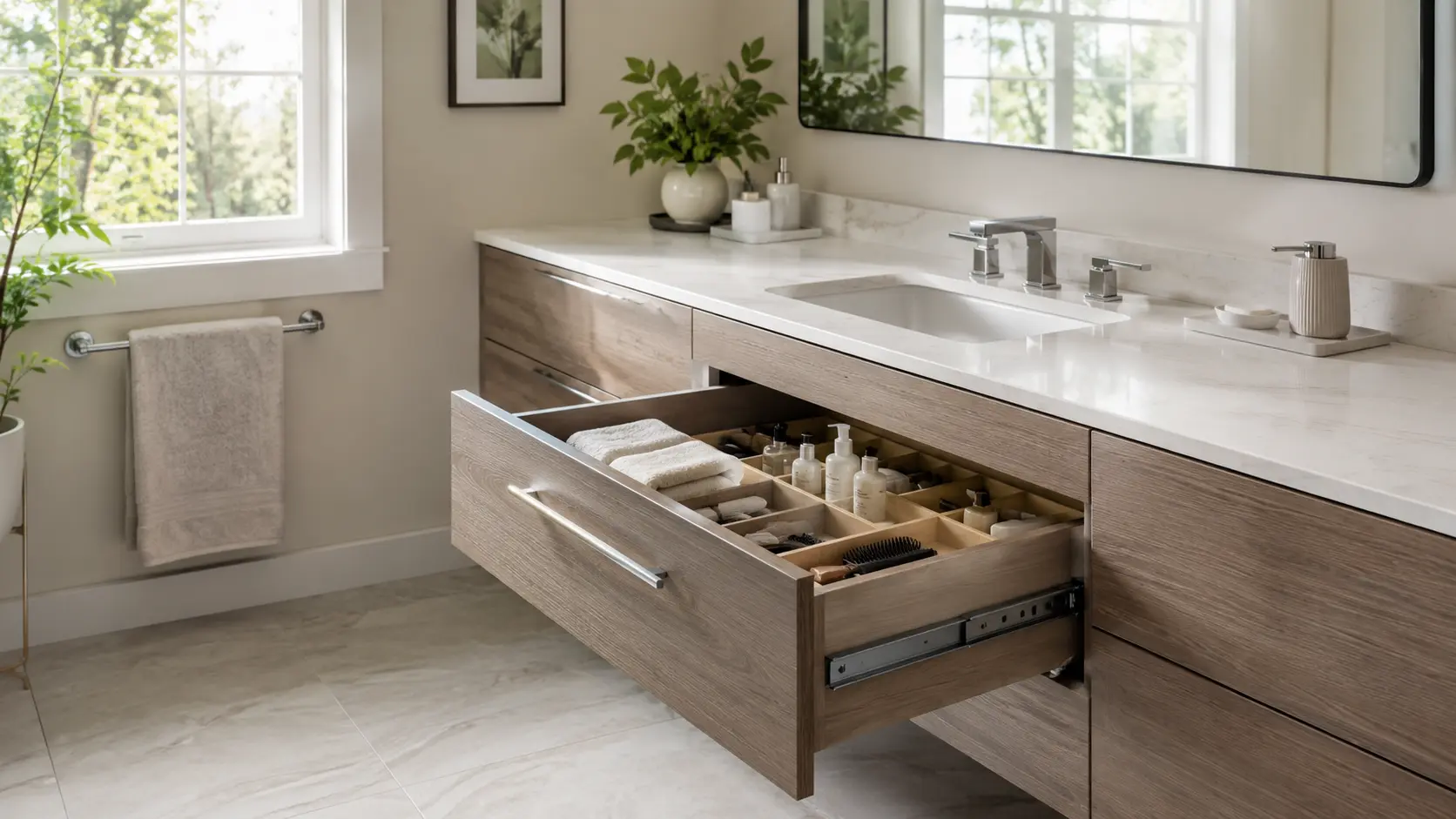
Soft-close bathroom vanity hardware improves daily use by making drawers and doors quieter, safer,
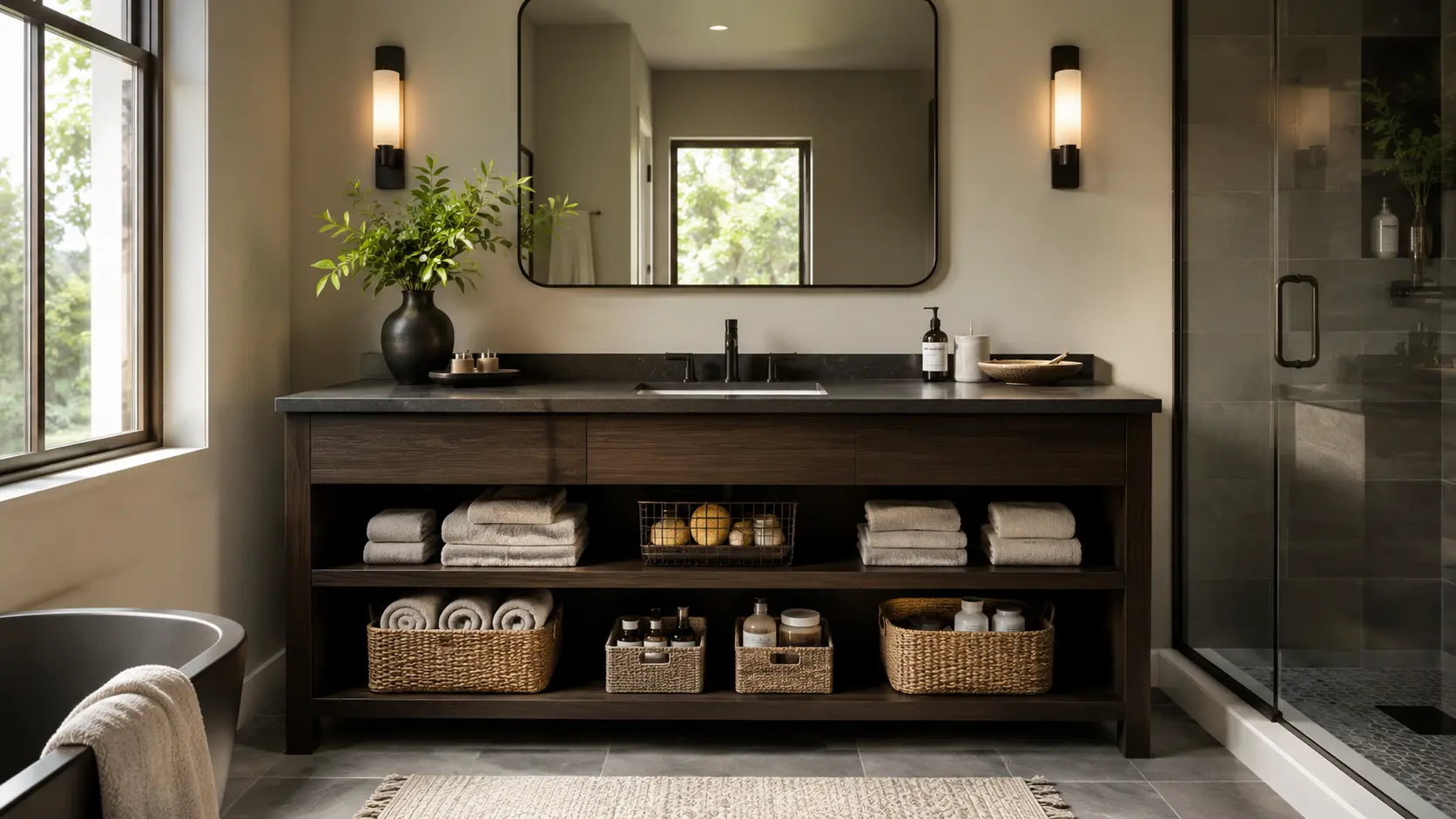
Open-shelf bathroom vanities influence storage and organization by making everyday items more visible, accessible,
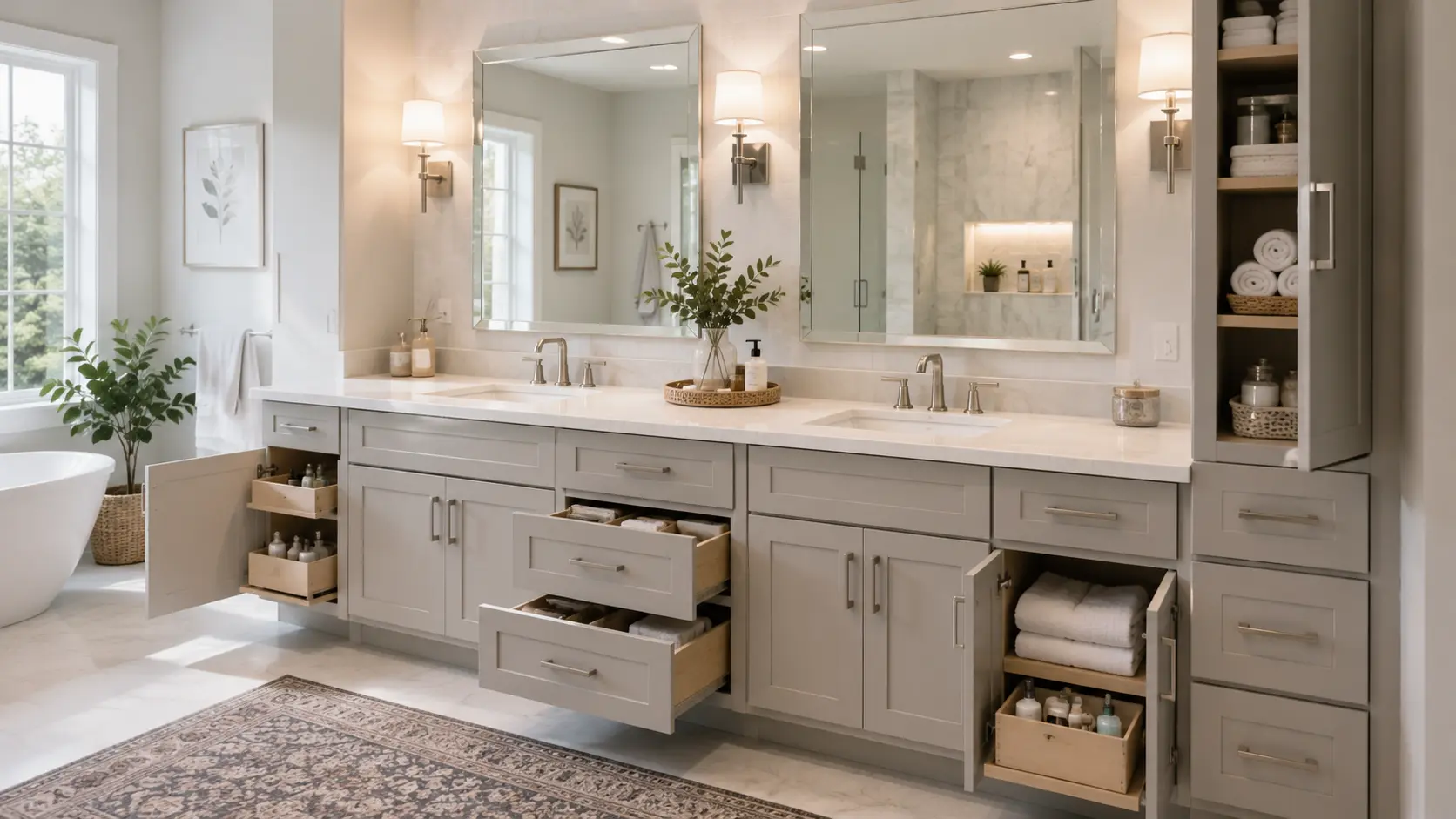
The right bathroom cabinets create more usable space around high-use vanities by keeping everyday
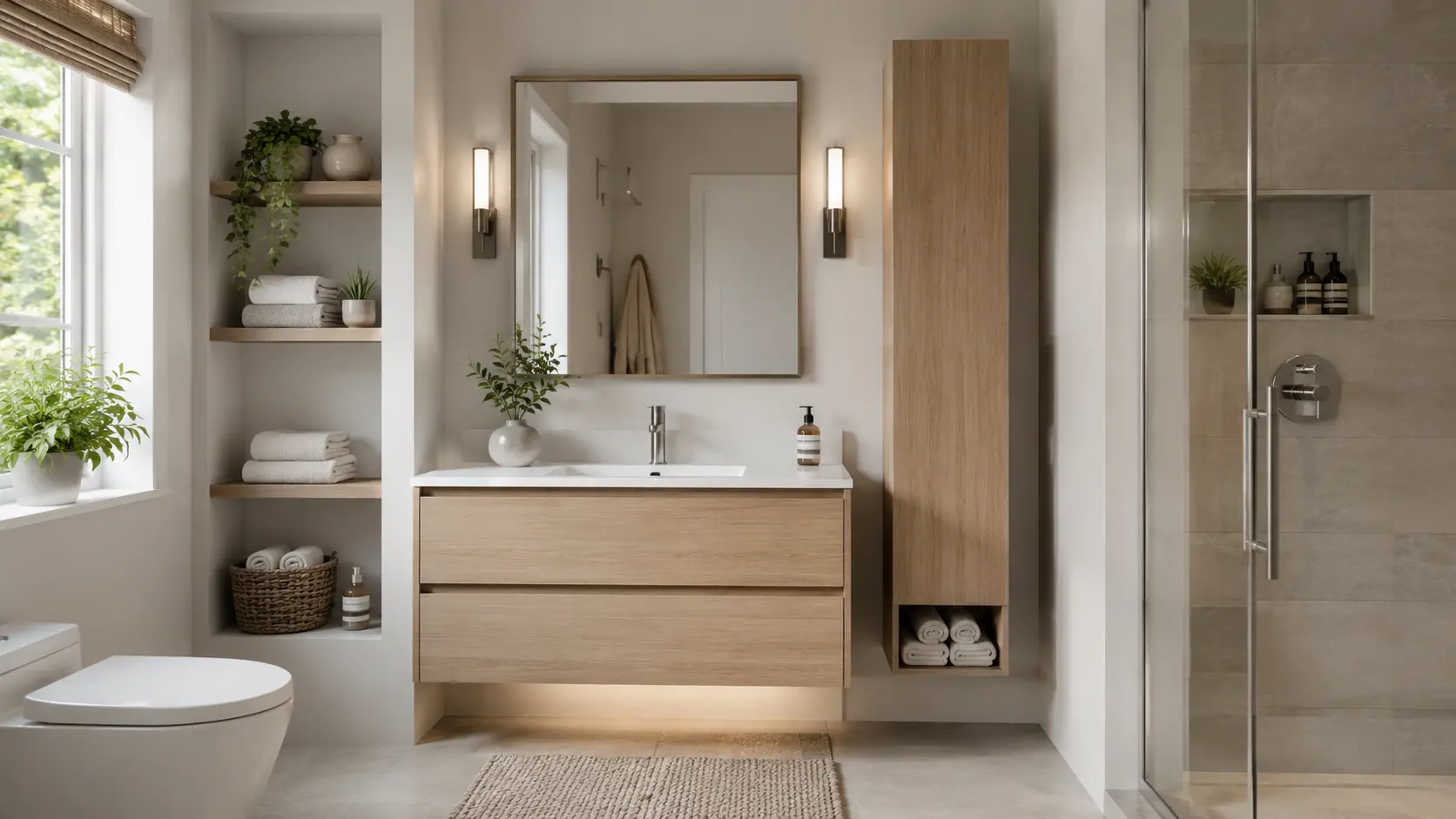
The bathroom cabinets that work best in bathrooms with limited wall space are floating
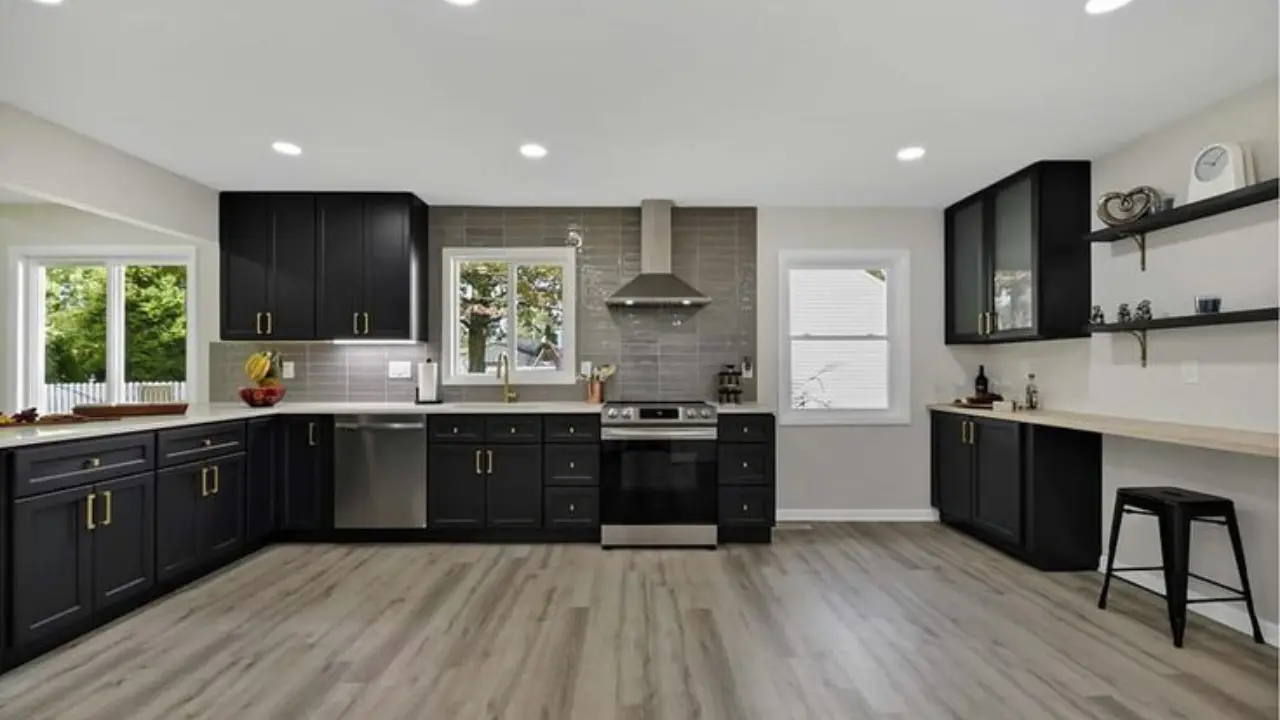
Cabinets and flooring are like the two main instruments in a kitchen design. One
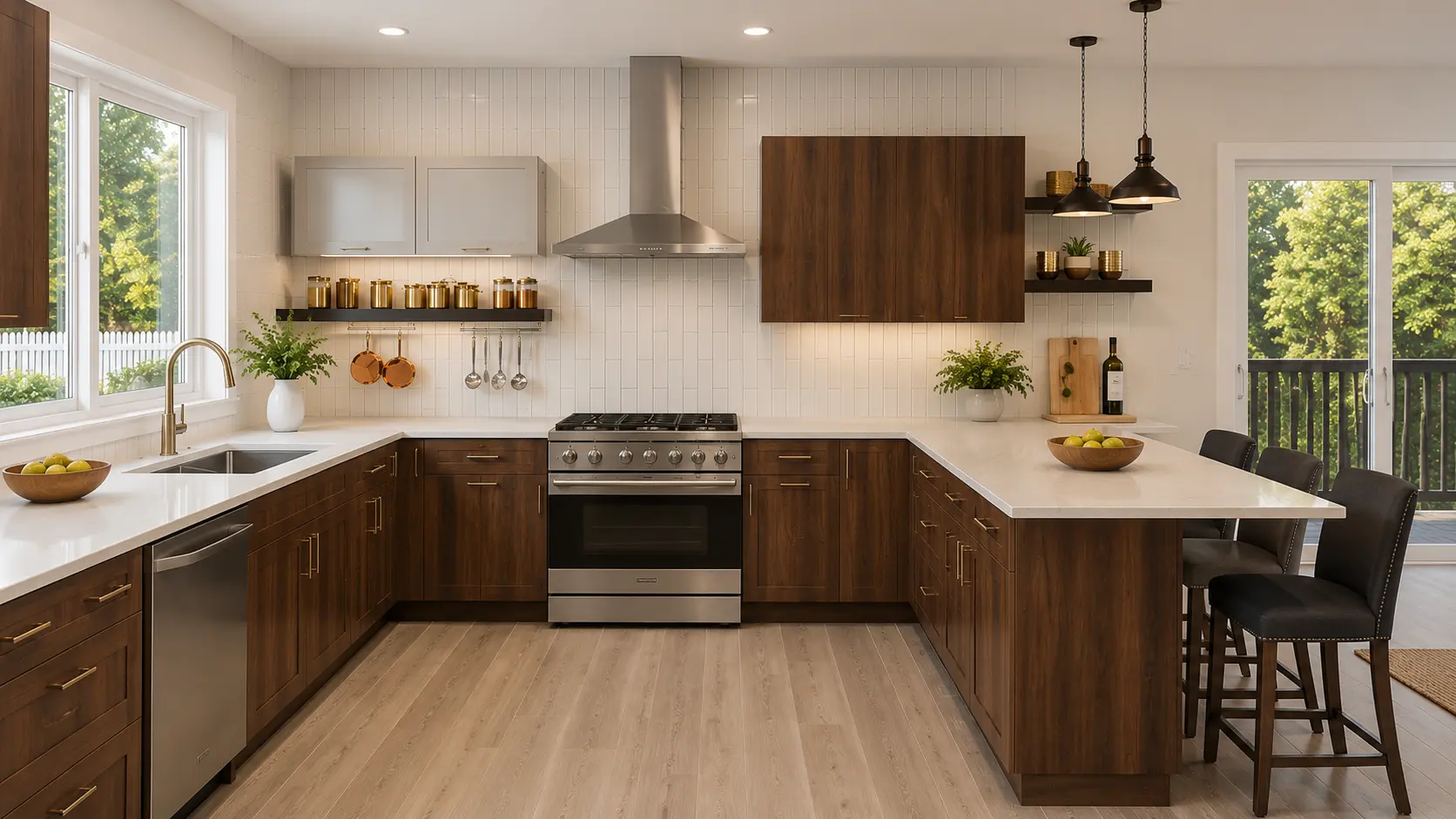
A kitchen used by one person can be simple to plan. One cook moves
Your dream kitchen shouldn’t wait. We partner with leading financing providers to make your project more affordable. Split your purchase into manageable monthly payments that fit your budget, so you can start your renovation now.
Receive a custom pricing offer based on your project scope.
Get access to specialized account management.