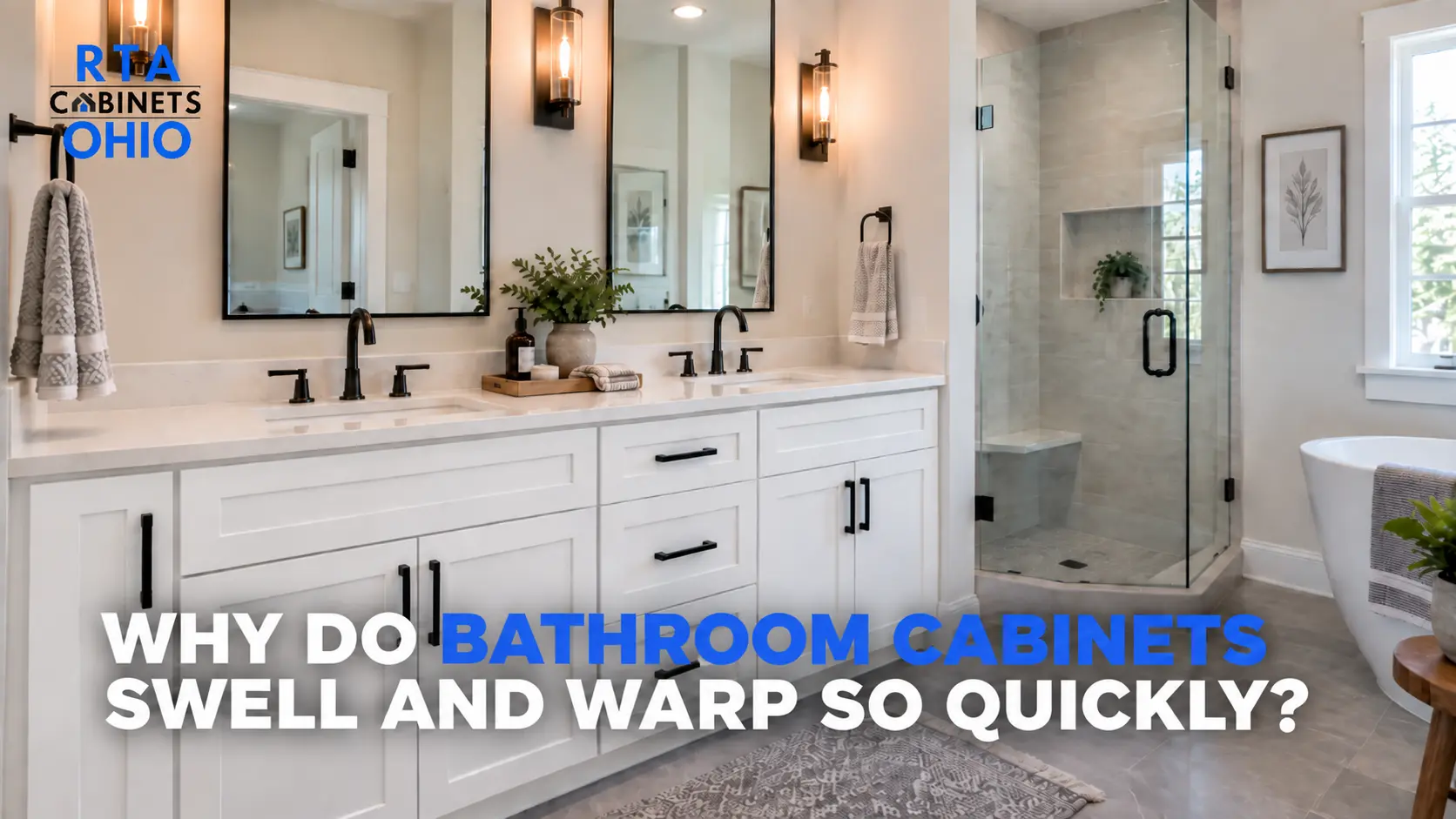
Bathroom cabinets swell and warp faster than almost any other cabinetry in a home because they sit inside a room built around water. Steam, splashes, and daily humidity swings soak into the material long before any damage shows on the surface. By the time a door won’t close flush or a shelf feels soft underneath, the cabinet box has usually been absorbing moisture for months. The good news is that the material and construction behind the finish decide most of the outcome, and that’s something a homeowner can control before the next remodel.
Swelling starts with water finding its way into wood fibers. Once those fibers absorb moisture, they expand. Cabinets in kitchens deal with occasional spills. Cabinets in bathrooms deal with a much harder environment.
Every shower creates a burst of hot, saturated air. That air doesn’t just disappear. It settles on cold surfaces, including cabinet doors and the inside of cabinet boxes.
This cycle repeats multiple times a day in most homes. Morning showers, evening baths, and even running hot water at the sink all add small amounts of moisture. Over months and years, that repetition adds up.
Homes near Parma Heights see this cycle intensify during Ohio’s humid summer stretch, when outdoor humidity keeps indoor air from drying out fully between uses. Older bathrooms without a properly vented exhaust fan struggle the most, since damp air has nowhere to go except back onto the walls, mirror, and cabinet doors.
A spill gets wiped up in seconds. Steam settles into every surface in the room, including places a towel can’t reach.
Cabinet doors near the shower or tub take the heaviest exposure. Steam condenses on the door face, then works into any seam, screw hole, or unsealed edge it can find.
During a hot shower, bathroom humidity can spike above 85 percent within minutes, and cabinets sit inside that moisture the entire time.
Swelling and warping are related, but they’re not the same problem. Understanding the difference helps homeowners catch damage earlier.
Swelling happens when a material absorbs water and physically thickens. It usually starts inside the cabinet, in places nobody looks at regularly.
The bottom panel under a sink base is a common starting point. So is the back panel against an exterior wall, and any shelf edge that isn’t sealed.
Warping is what happens after swelling goes uneven. One side of a panel absorbs more moisture than the other, and the material bends instead of staying flat.
A warped door won’t sit flush anymore. Hinges strain to hold it shut, and gaps appear along the edges where moisture can enter even faster.
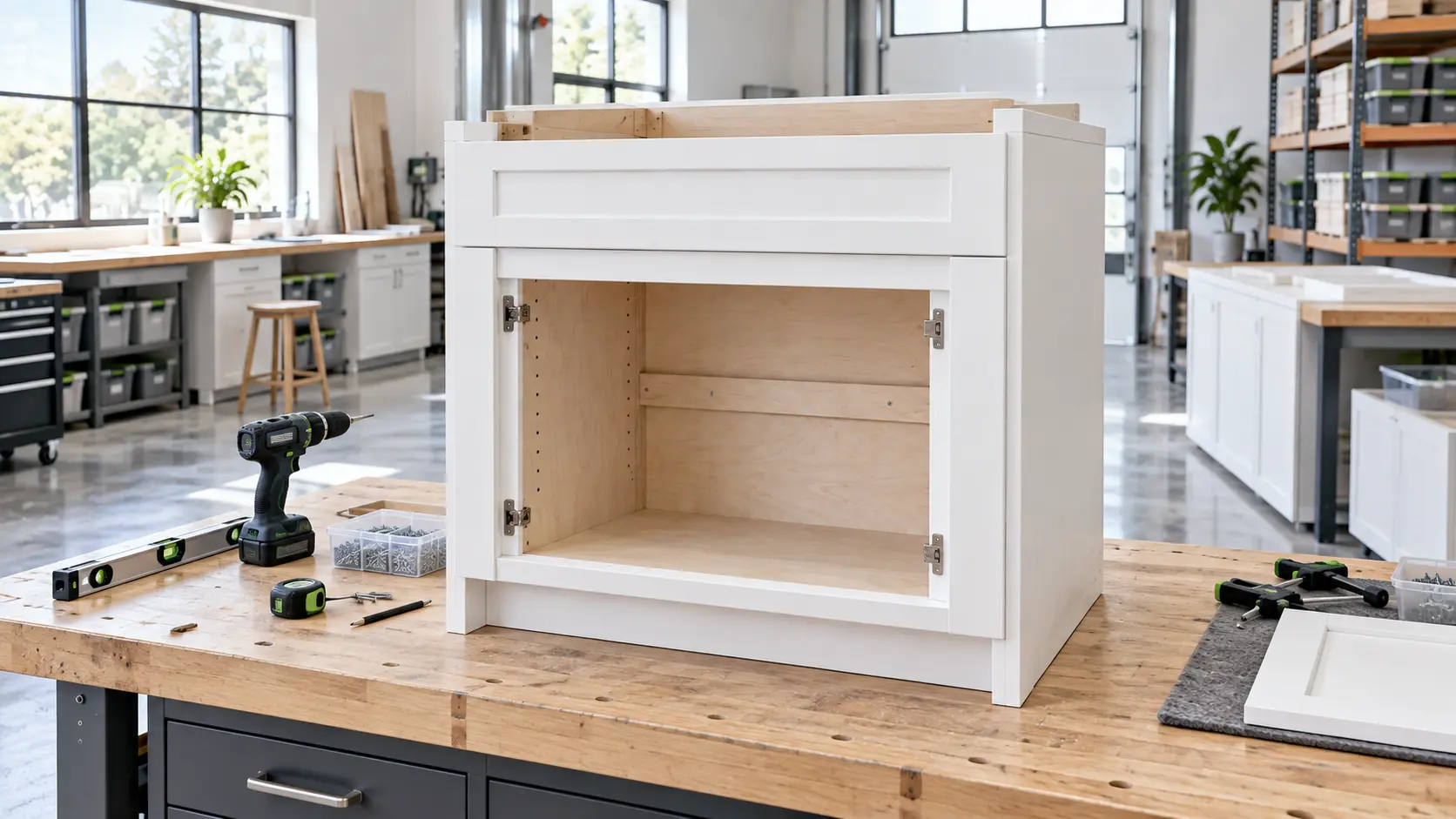
Not every cabinet material reacts to water the same way. The material underneath the finish is what actually determines how long a bathroom cabinet lasts.
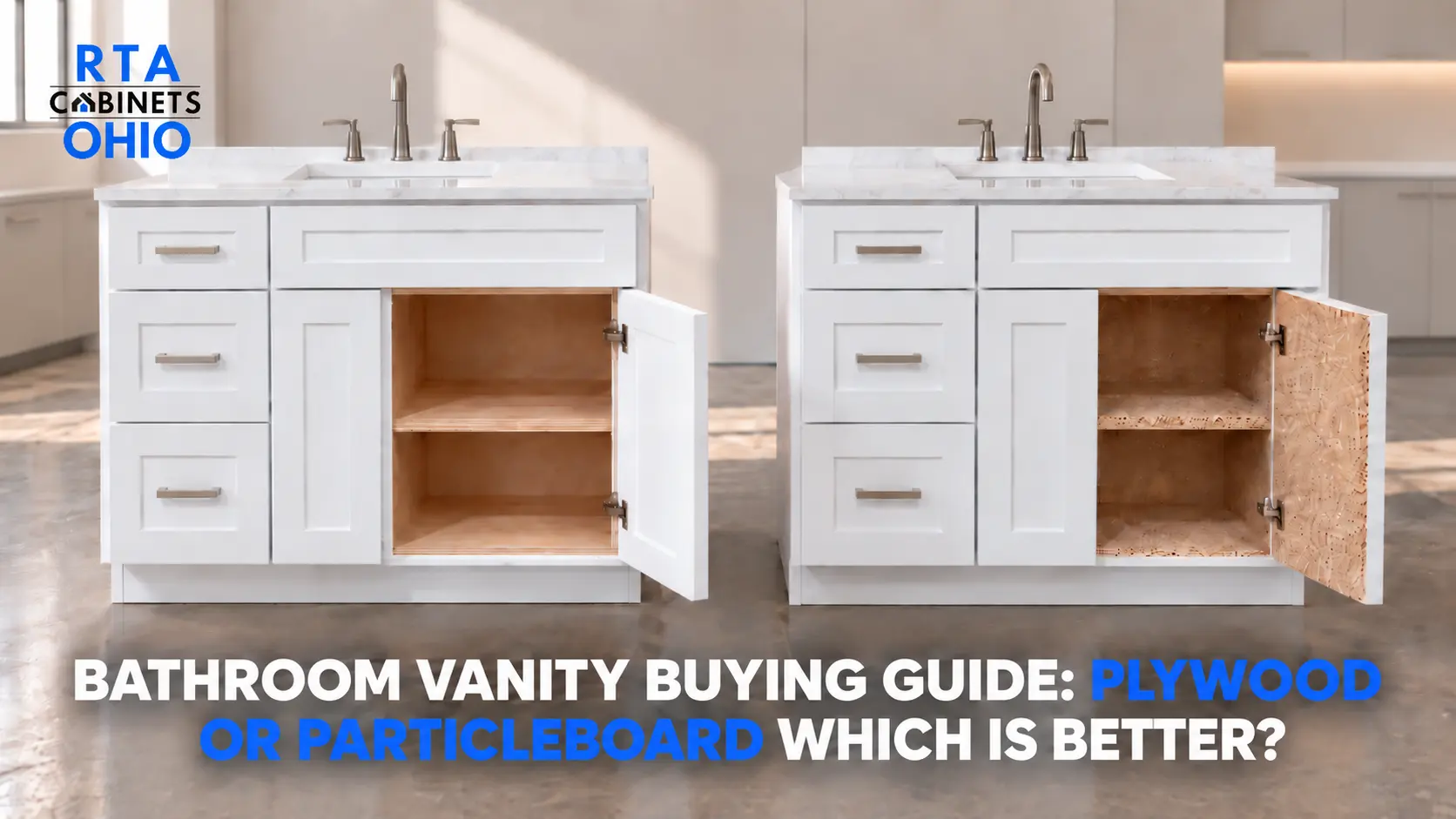
Plywood is built from thin layers of real wood veneer, glued with the grain running in alternating directions. That layered structure resists warping because no single layer can expand freely on its own.
When the edges are properly sealed, plywood holds its shape through repeated humidity swings far better than pressed wood products. This is one reason premium cabinet lines lean on plywood for boxes, shelves, and structural parts.
MDF and particleboard are made from compressed wood fibers held together with resin. They’re smooth, affordable, and easy to paint, which makes them common in budget cabinetry.
The problem is what happens once water reaches the core. Unlike solid wood or plywood, MDF and particleboard don’t fully recover after they swell. The resin bonds break down, the material thickens permanently, and no amount of drying reverses it.
Solid wood brings a warm, natural look that many homeowners want in a primary bathroom. It expands and contracts with humidity, then generally returns close to its original size once it dries.
That reversibility only holds up with proper sealing and regular maintenance. Left unsealed in a humid bathroom, solid wood can still warp, crack, or cup over time.
RTA Cabinets Ohio builds every cabinet from premium all-plywood construction and backs it with a 6 year warranty, coverage most stock cabinet lines don’t offer.
Damage rarely starts in an obvious spot. Knowing where to check first can catch a problem months before it becomes a full replacement.
Every cut, drilled hole, or plumbing cutout exposes the raw core of a panel. Sink base cabinets have the most of these openings, for supply lines, drain pipes, and shutoff valves.
If any of these cutouts weren’t sealed during manufacturing, water finds the exposed core quickly. This is often the very first place swelling begins.
Toe kicks sit at floor level, where dripped water and mopping moisture collect. Any exposed or poorly sealed edge along the bottom of a cabinet takes on water almost every time the floor gets cleaned.
A cabinet installed against an exterior wall, or a wall that backs up to a shower, can absorb moisture from behind without any visible spill at all. This is one of the hardest failure points to catch early, since it’s hidden from view until the damage spreads. Pulling a cabinet away from the wall once a year for a quick look is a simple habit that catches this early.
Northeast Ohio adds its own layer to this problem. Lake Erie humidity swings between seasons in a way drier climates never see, and both extremes push moisture into bathroom cabinets from a different direction.
During summer months, outdoor humidity often stays high well into the evening, which means indoor air near Parma and Parma Heights has less chance to fully dry out between showers. Air conditioning helps some, but the bathroom exhaust fan still does most of the real work of clearing that moisture out.
Winter creates a different version of the same problem. Cold exterior walls meet warm, humid bathroom air, and condensation can form on cabinet surfaces near those walls even without a shower running. Homes near Brookpark Rd and Ridge Rd built decades ago often have less wall insulation than newer construction, which can make this worse. Cabinets built from sealed, all-plywood construction handle this two-season cycle better than pressed wood, since the material doesn’t rely on staying perfectly dry to hold its shape.
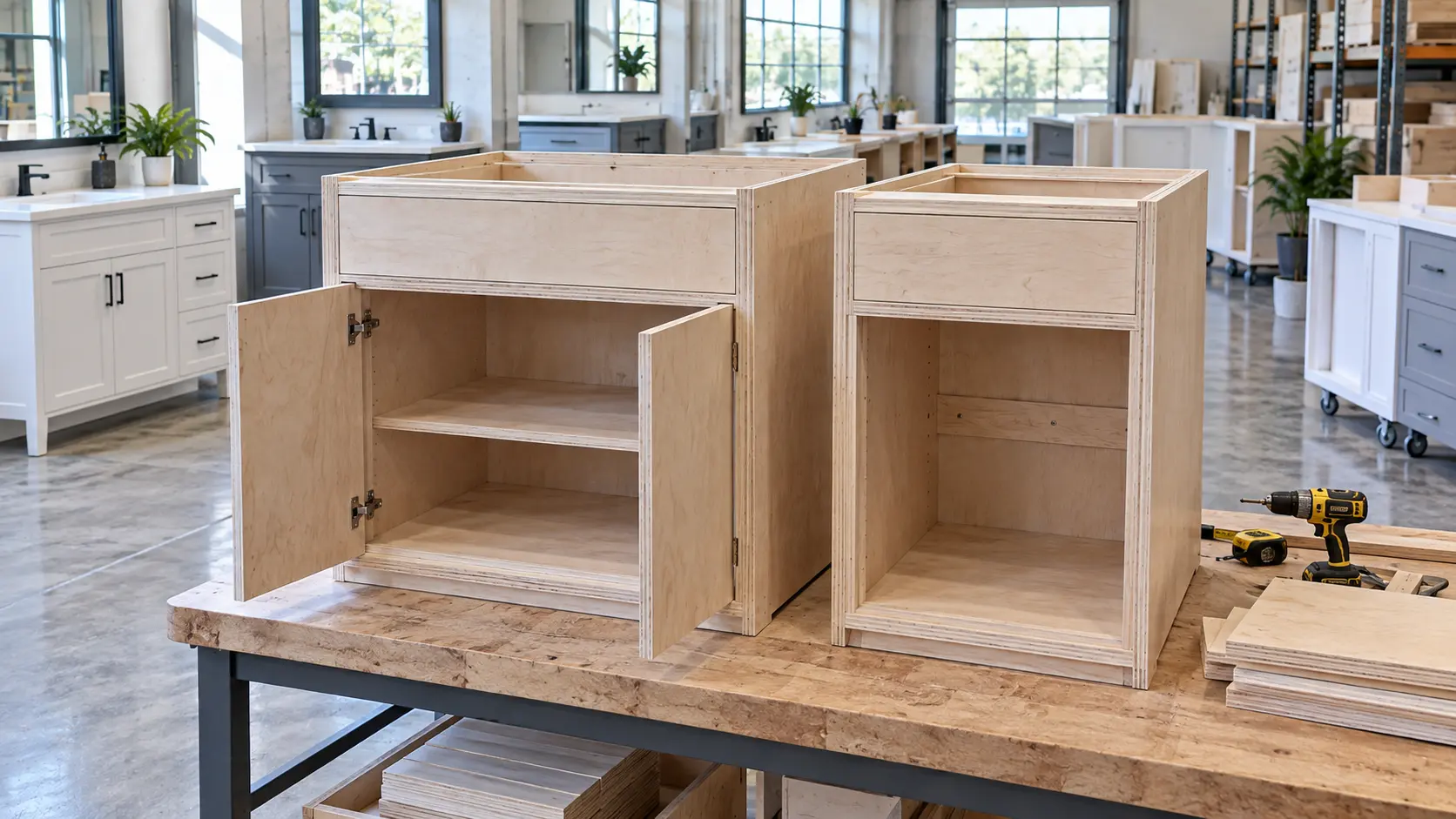
The visible door style says very little about how long a cabinet will actually last. The construction underneath matters more.
Every cut edge on a cabinet panel needs to be sealed, either with edge banding or a factory finish. An unsealed edge is an open door for moisture, no matter how good the material is.
A well-built cabinet box stays square under weight and use. Reinforced corners, solid back panels, and properly supported shelves all reduce the flex that lets water work its way into seams.
Doors and drawers need enough tolerance to expand slightly without binding. Cabinets built too tight can jam the moment humidity rises, while cabinets built with the right clearance keep working through seasonal swings.
A showroom can make every option look similar at a glance. A few direct questions separate cabinets built to last from cabinets that will need replacing again in just a few years.
The door finish tells you almost nothing about what’s inside the box. Ask specifically whether the cabinet box, shelves, and back panel are plywood, MDF, or particleboard, since that answer matters more than the color or door style on display.
Plumbing cutouts, drawer holes, and cut edges are where moisture gets in first. Ask how the manufacturer seals those spots, and whether the warranty actually covers moisture related swelling, not just hardware defects.
A longer warranty number means little if it excludes the most common failure point in a bathroom. Confirming this upfront avoids a surprise later, when a legitimate moisture issue gets treated as normal wear and tear instead of a covered repair.
None of this means bathroom cabinets are doomed to fail. A few habits make a real difference in how long they last.
Running the bathroom exhaust fan during and after a shower clears humid air before it settles on cabinet surfaces. Homes without a working fan see moisture damage develop noticeably faster.
Wiping down cabinet surfaces after a shower, especially near the sink and tub, keeps standing moisture from sitting on the finish. Checking sealant and edge banding once a year catches small gaps before they become entry points.
The single biggest decision happens before installation, when choosing the cabinet itself. Starting with all-plywood construction avoids most of the moisture problems that show up in particleboard cabinets within just a few years.
RTA Cabinets Ohio has completed 8,000+ kitchen and bathroom projects across Northeast Ohio, work that reflects what actually holds up in real, humid bathrooms.
A single loose hinge or a small sealant gap is usually worth repairing. Widespread swelling along the bottom panel, a warped door that no longer closes, or a soft spot under the sink are different signs entirely.
Once the core material has swollen, there’s no repair that fully reverses it. At that point, replacing the affected cabinet with all-plywood construction is the more reliable long term fix, especially in a room that will keep producing steam every single day.
Waiting rarely saves money. A cabinet that only gets minor patch repairs tends to fail again within a year or two, and the damage often spreads to the countertop, backsplash, or flooring nearby in the meantime. Replacing it early, with a material built for the room this time, is usually the cheaper path once the full picture is considered.
Homeowners exploring bathroom cabinets near Parma often reach this point after years of small warning signs that finally add up. Catching it early, or starting with better material the first time, saves both money and frustration down the road. Anyone ready to compare styles can shop bathroom cabinets built to last built specifically to handle a Northeast Ohio bathroom.
For homeowners who want to see the difference between plywood and pressed wood construction firsthand, walking through real display cabinets tends to make the decision much easier than reading spec sheets online. It’s also worth revisiting common bathroom vanity mistakes to avoid before finalizing a new layout, since material choice is only one part of getting a bathroom vanity right.
RTA Cabinets Ohio works with homeowners throughout Parma and the surrounding Cuyahoga County communities, including the Parma Heights neighborhood near Brookpark Rd and Ridge Rd. This area sits close to John Petruska Park, and the warehouse can be found using coordinates 41.4125425, -81.7460591 for anyone mapping out a visit. Homeowners here deal with the same humid Ohio summers and cold, damp winters that push moisture into cabinets faster than in drier climates, which makes material choice especially important for anyone comparing bathroom cabinets for an upcoming remodel.
Get Bathroom Cabinets Near Parma Heights Services Now
Can a swollen bathroom cabinet be fixed, or does it need to be replaced?
A small area of swelling along an edge can sometimes be sanded, re-sealed, and repainted. Once the core material has thickened permanently, especially in MDF or particleboard, replacement is the more reliable fix.
How long does it take for moisture damage to show up in a bathroom cabinet?
It varies by material and ventilation, but particleboard and untreated MDF can show visible swelling within a couple of years in a poorly ventilated bathroom, while sealed plywood typically lasts much longer under the same conditions. A bathroom without a working exhaust fan will almost always see damage develop faster, regardless of material.
Is plywood really better than MDF for bathroom cabinets near Parma?
Yes, in most cases. Plywood’s layered construction resists the kind of irreversible swelling that MDF and particleboard experience once water reaches the core, which matters most in a room that produces steam every day.
What’s the first sign that a bathroom cabinet is absorbing too much moisture?
A door or drawer that no longer sits flush is usually the earliest visible sign. Checking under the sink for soft spots or discoloration on the bottom panel can catch damage even earlier.
Does running the bathroom fan actually make a difference for cabinet longevity?
It does. Clearing humid air quickly after a shower reduces how long moisture sits on cabinet surfaces, which slows down both swelling and warping over time. Leaving the fan running for ten to fifteen minutes after a shower makes a noticeable difference over the life of a cabinet.